
What the numbers mean
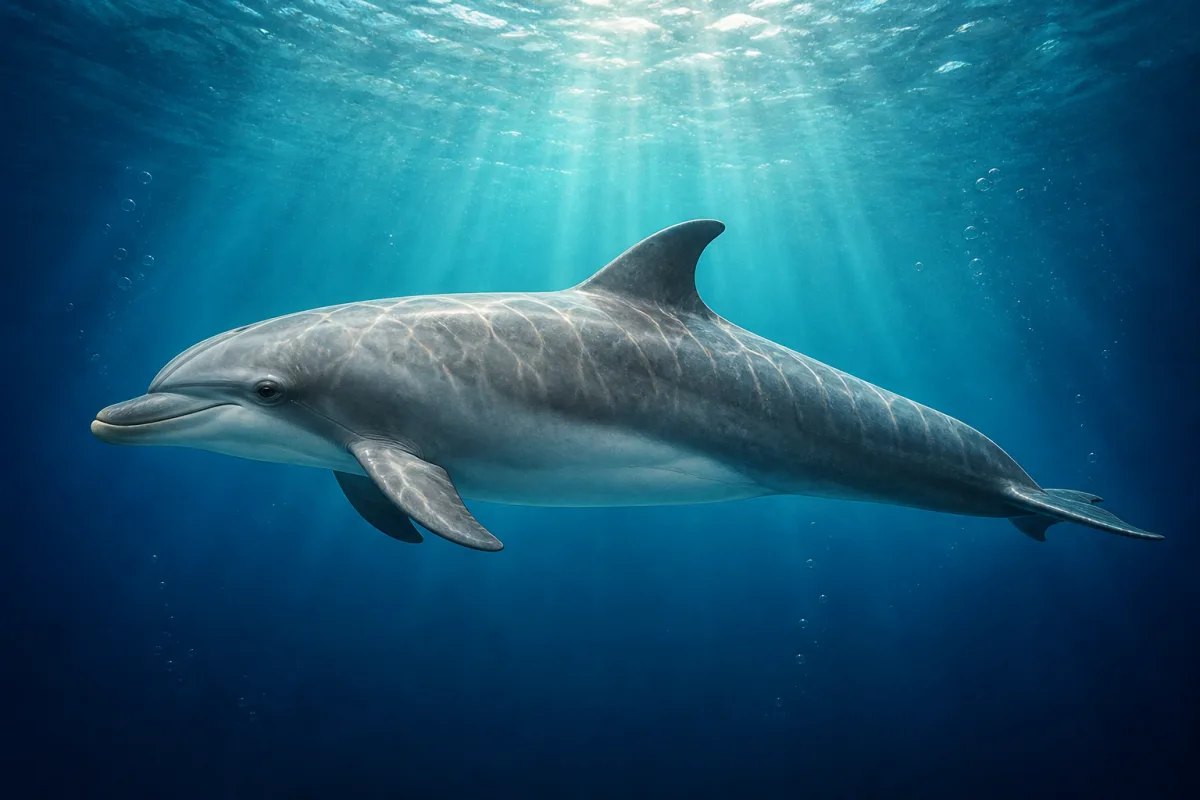
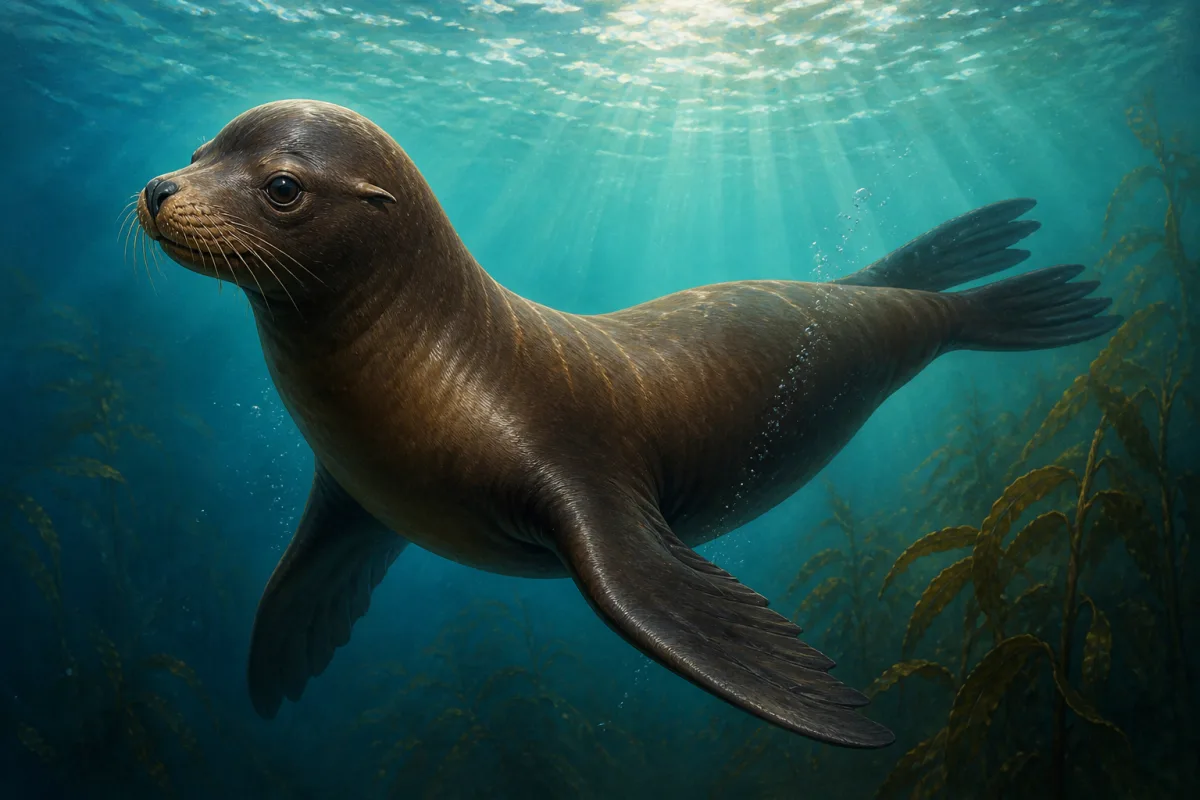
The common bottlenose dolphin and the California sea lion are the two marine mammals Americans are most likely to see, and they are routinely grouped together as clever, social, coastal animals that do well around people. The grouping hides a fundamental division. One is a cetacean that completes its entire life cycle in the water. The other is a carnivore whose ancestors returned to the sea more recently, and it still gives birth, mates and rests on land.
Almost everything else follows from that. Being tied to a beach concentrates sea lions onto a small number of island rookeries and gives researchers something countable; being free of one spreads dolphins along entire coastlines in groups whose membership changes by the hour. The two also read their surroundings differently, one primarily by sound and the other by sight and touch, and each has built a social system around the constraints its body imposes.
Fully aquatic, or amphibious
The sea lion is an eared seal, and the difference between otariids and true seals goes well beyond the visible ear flaps. A sea lion swims with long, wing-like foreflippers rather than sculling with its hindquarters, and it can rotate its hind flippers forward beneath the body, so it walks and climbs on all fours instead of hauling itself along on its belly. That mobility explains the animals resting on breakwaters, buoys and marina docks, and it lets them climb fish ladders at dams on the Columbia River, well over a hundred miles from the sea.
The dolphin has no such option and needs none. Its body is committed to water, and its variability shows up in size rather than in limbs: length runs from about 6 feet in warm inshore waters to 13 feet in cold temperate seas. Nearly every well-studied region holds a smaller coastal form that stays over the shelf and a larger offshore form that ranges into deep water, and the two differ in diet, blood chemistry, parasite load and, in several regions, in genetics distinct enough to suggest limited interbreeding.
The sexes diverge far more sharply in the sea lion. Adult males reach about 8 feet and 600 to 900 pounds, roughly three times the mass of adult females, and develop a raised bony crest along the top of the skull that gives the forehead its domed profile. Male bottlenose dolphins average heavier than females of the same length, but the gap is modest by comparison, which is what one would expect of a species that does not defend a patch of beach.
Hunting by sound and hunting by sight
Bottlenose dolphins hunt by echolocation, emitting click trains that resolve targets in murky water and even detect fish buried under sand. The resolution is remarkable: a dolphin can detect an object the size of a golf ball from more than 300 feet away. That capability is what allows resident communities to work estuaries where visibility is close to zero, and it removes any dependence on daylight, so foraging peaks follow the tide rather than the sun.
The sea lion is a pursuit hunter that relies on vision and touch. Forward-facing eyes adapted to dim light and stiff vibrissae that register water movement close to the body let it chase individual fish and squid in short, shallow dives. Groups often work the same bait aggregation as dolphins, shearwaters and pelicans, herding schooling fish toward the surface or against a wall of kelp. Foraging shows a strong nocturnal bias in many areas, because market squid and other prey rise toward the surface after dark.
Both are generalists that take whatever is locally abundant, and both exploit human structures. Sea lions wait below fish ladders, weirs and outflows where prey is concentrated, a habit that puts them into conflict with salmon managers on the Columbia and Willamette rivers. Dolphins in some regions follow shrimp trawlers to take fish stirred up or discarded by the gear. The behaviors look similar and arise from the same opportunity, but one animal is using a bottleneck it can climb to and the other is using a boat.
Where each can go, and for how long
Neither animal is a deep diver by marine mammal standards, but their limits differ. Most sea lion foraging dives stay in the upper 260 feet and last under three minutes, with the deepest recorded approaching 900 feet and males diving deeper and longer than females. Coastal dolphins feed almost entirely above 100 feet, while tagged offshore animals have recorded dives to roughly 1,475 feet. In both cases the species' true limit is less well defined than the record figures suggest.
Range is shaped by the land constraint. Sea lion breeding is concentrated on islands: San Miguel, San Nicolas, Santa Barbara and San Clemente in California's Channel Islands, and Los Coronados, Cedros, the San Benito group and Guadalupe off Baja California. Non-breeding males range far north of the rookeries in fall and winter, which is why the sea lions on docks in Oregon and Washington are almost all male, and why the species' distribution looks so different depending on the season and the sex.
Dolphins are not anchored to anything. Resident communities occupy many United States estuaries year-round, among them Sarasota Bay, Tampa Bay, the Indian River Lagoon and the sounds of North Carolina, while other populations range along the shelf edge or far offshore. The species is found in temperate and tropical water worldwide and is absent only from polar seas. Where a sea lion population is a set of rookeries with animals radiating out from them, a dolphin population is a stretch of coast.
Two social systems
Bottlenose dolphins live in fission-fusion societies. Typical groups hold two to fifteen animals and change composition constantly, but the stability lies in the relationships rather than the groups: mothers and calves stay together for years, and alliances of two or three males can persist for a decade or more. Each dolphin develops a signature whistle within its first months of life, keeps it for decades, broadcasts it to announce identity and copies the whistles of close associates, which is the nearest thing to naming documented in a wild animal.
Sea lion society is organized around the breeding beach. Bulls arrive at island rookeries in May, defend small stretches of shoreline for weeks while fasting, and bark almost continuously; females move freely between territories and are not herded. Outside the breeding season the species stays gregarious for its own sake, packing onto docks, jetties and rafts in mixed groups of dozens to hundreds, most famously at Pier 39 in San Francisco, which sea lions occupied in 1989 and have used ever since.
Both species solved the problem of recognizing a specific individual by voice, and both did it because they had to. A sea lion mother returning from a foraging trip must locate her own pup among hundreds on a crowded beach, and mother and pup relocate each other by call, each recognizing the other's voice. A dolphin in a group whose membership changes hourly needs to announce who it is and address particular companions. The same solution, arrived at from two different pressures.
Raising a single young
Both species produce one offspring at a time and invest heavily in it, but the logistics differ completely. Dolphin gestation lasts about twelve months and produces a single calf roughly 3 to 4 feet long. Nursing continues for 18 months to two years, and calves usually stay with their mother for three to six years, learning where and how to feed before separating. Because the calf travels with her, it is present for every foraging trip, which is how local techniques pass between generations.
The sea lion pup stays behind. A single pup weighing 13 to 20 pounds is born on the rookery in June or early July, the mother mates again within a month, and the fertilized egg pauses for roughly three months before implanting, making total gestation about eleven months. Pups nurse for at least six months and often close to a year while the mother alternates two- to three-day foraging trips with visits ashore, and that separation is the vulnerable point in the whole arrangement.
That difference explains a pattern seen repeatedly along the California coast. When marine heatwaves or El Niño conditions push prey deeper and farther offshore, nursing mothers cannot find enough food within range of the rookery, and emaciated pups strand by the thousand. A dolphin calf faces its own risks, but it is never waiting on a beach for a parent to return, so poor ocean conditions register in the population through slower growth and lower survival rather than through mass strandings of young.
Two Least Concern listings with different local problems
Both species are assessed as Least Concern, and in both cases the global category conceals what is happening in specific places. The California sea lion has grown for decades under the Marine Mammal Protection Act, with the United States stock now estimated at more than 250,000 animals, close to what the habitat is thought to support. The exception is regional: numbers in the Gulf of California have fallen at several rookeries and are treated as a separate management concern.
For the dolphin, the exceptions are more numerous. Several United States coastal stocks are designated as depleted or strategic under the Marine Mammal Protection Act, and unusual mortality events, including one linked to the 2010 Deepwater Horizon oil spill, have caused sustained declines in northern Gulf of Mexico populations. Living close to shore exposes the species to nearly every coastal pressure: gillnets and trawls, ingested and entangling fishing line, and industrial contaminants that are passed to calves in milk.
Their most distinctive threats are unrelated to each other. Sea lions are poisoned by domoic acid produced by blooms of the diatom Pseudo-nitzschia, which accumulates in anchovy and sardine and causes seizures and permanent damage to the hippocampus, with hundreds of animals stranding in bad years; the link was first established in Monterey Bay in 1998. For dolphins, feeding by the public is a specific and underappreciated hazard, since animals that learn to approach boats for food suffer far higher rates of injury from propellers and gear.
Both also sit in the middle of the same predator relationships and serve the same monitoring purpose. Great white sharks and mammal-hunting orcas take sea lions, and shark-bitten survivors are a regular sight at California rookeries; in Sarasota Bay roughly a third of adult dolphins carry healed shark bite scars. Because both species are abundant, long-lived, closely watched and resident in known places, changes in their body condition and pup or calf survival often flag shifts in coastal conditions before fishery data do.