
The catalog

Every predator profile

33 ocean hunters, from reef ambushers to deep-sea giants. Filter by group, ocean, habitat, prey or conservation status, then open any profile for the full account.
Showing 33 of 33 profiles

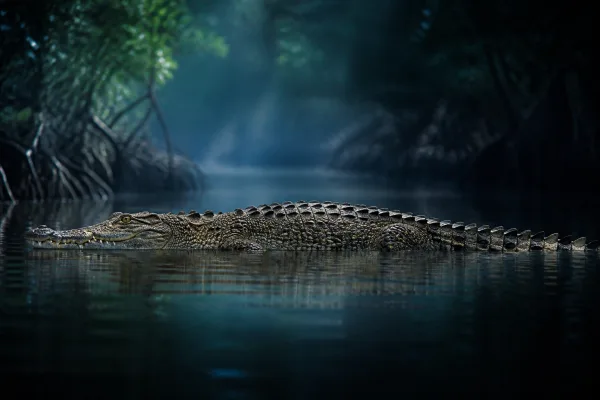
Marine Crocodilians American crocodile resting on a mangrove bank, showing a narrow tapered snout, olive-gray scales, and a raised bony ridge just in front of the eyes.

American Crocodile

Crocodylus acutus

A salt-tolerant crocodile of mangrove coasts from Florida to Peru, and one of the few large reptiles to have recovered measurably under United States protection.
Length 8.2–16 ft Vulnerable
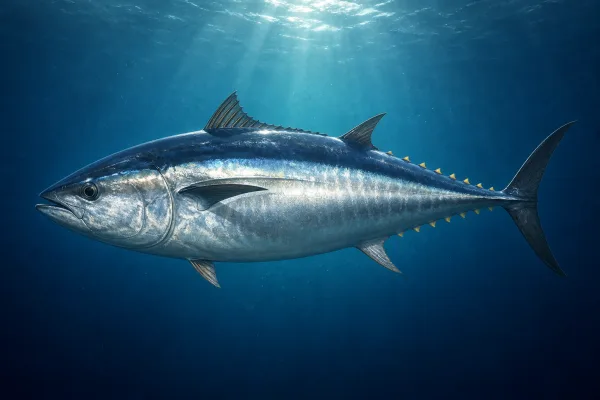
Predatory Fish Atlantic bluefin tuna in open blue water, a heavy steel-blue torpedo with silvery flanks, short yellow finlets and a stiff crescent-shaped tail.

Atlantic Bluefin Tuna

Thunnus thynnus

A warm-bodied ocean sprinter that crosses the Atlantic between cold northern feeding grounds and two widely separated spawning areas.
Length 3.3–15 ft Least Concern
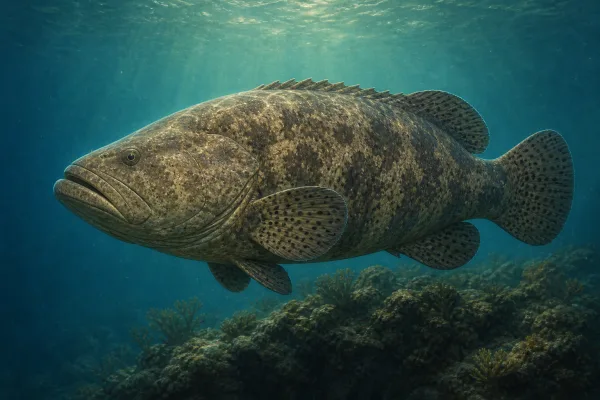
Predatory Fish Atlantic goliath grouper resting beside a reef ledge, a broad mottled brown fish with a very large mouth, small high-set eyes and rounded fins.

Atlantic Goliath Grouper

Epinephelus itajara

A slow-growing reef giant that feeds by suction, booms with its swim bladder, and gathers at the same wrecks to spawn each fall.
Length 3.3–8.2 ft Vulnerable
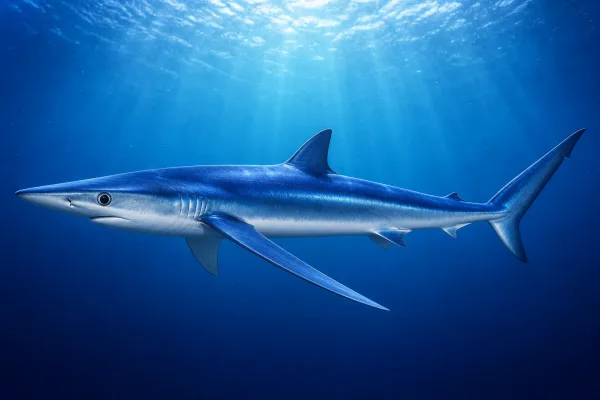
Sharks Blue shark in open ocean, showing its slim indigo-blue back, white belly, long pointed snout and unusually long, narrow pectoral fins.

Blue Shark

Prionace glauca

A slender, indigo-backed ocean traveler that crosses entire ocean basins and bears the largest litters recorded in any shark.
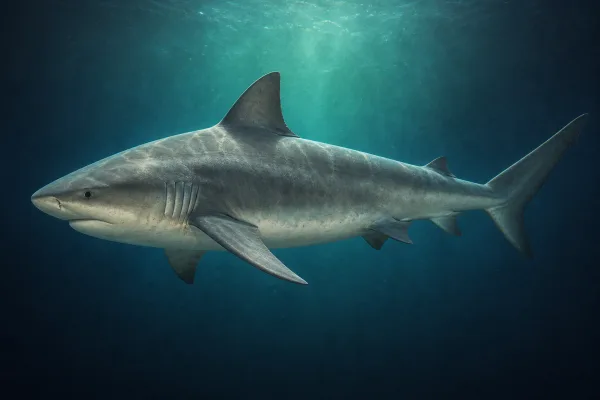
Length 5.9–12 ft Near Threatened
Sharks Bull shark in shallow green water, showing its stocky gray body, short blunt snout, small eyes and tall triangular first dorsal fin.

Bull Shark

Carcharhinus leucas

A powerfully built coastal shark that tolerates fresh water and turns up in rivers and lakes hundreds of miles from the sea.
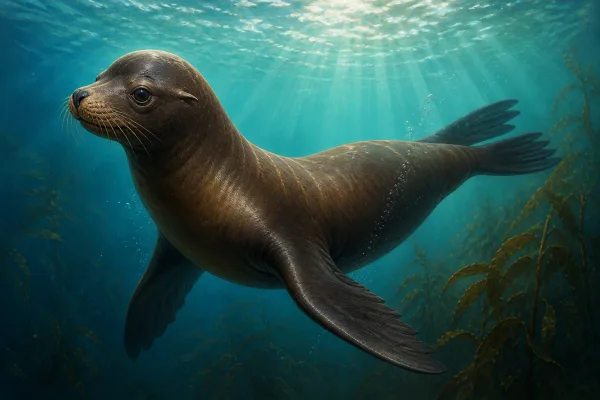
Length 5.9–11 ft Vulnerable
Seals, Sea Lions & Walruses A California sea lion gliding through sunlit blue-green water above a kelp bed, its long foreflippers spread and its whiskers and large dark eyes clearly visible.

California Sea Lion

Zalophus californianus

An agile eastern Pacific eared seal that swims with its foreflippers, walks on all four limbs ashore, and has recovered to several hundred thousand animals.
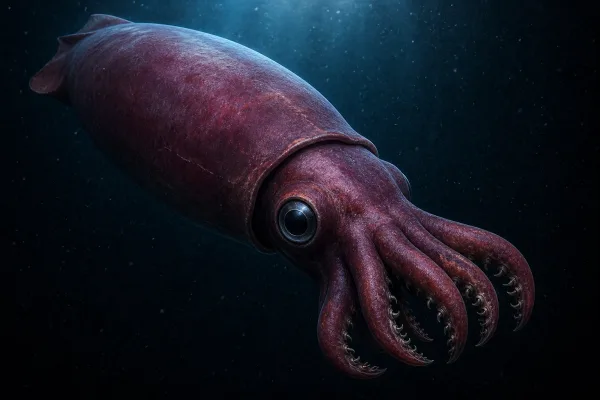
Length 4.9–7.9 ft Least Concern
Predatory Cephalopods Colossal squid in dark water, showing a stout pale mantle, short thick arms, an enormous dark eye, and hooked clubs at the ends of two tentacles.

Colossal Squid

Mesonychoteuthis hamiltoni

The heaviest invertebrate known, a stout Antarctic squid with swiveling hooks on its tentacles and the largest eyes ever measured in an animal.
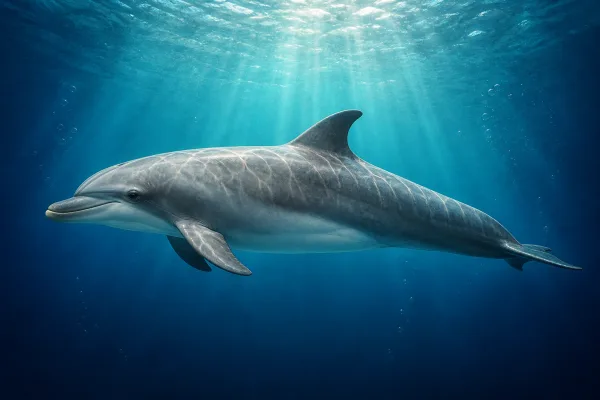
Length 8.2–15 ft Least Concern
Toothed Whales & Dolphins Common bottlenose dolphin leaping clear of the water, gray above and pale below, with a short thick beak, creased jawline and tall curved dorsal fin.

Common Bottlenose Dolphin

Tursiops truncatus

A widespread coastal and offshore dolphin that identifies itself with a signature whistle and passes local hunting traditions between generations.
Length 6.6–13 ft Least Concern
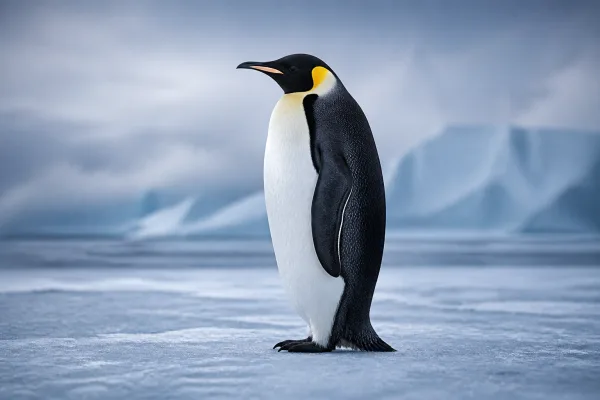
Other Ocean Hunters An emperor penguin standing upright on sea ice, showing its black head and back, white belly, and the yellow-orange patches on its neck and lower bill.

Emperor Penguin

Aptenodytes forsteri

The largest penguin and the deepest-diving bird, breeding on Antarctic fast ice through the polar winter and fasting for months at a time.
Length 3.3–4.3 ft Near Threatened
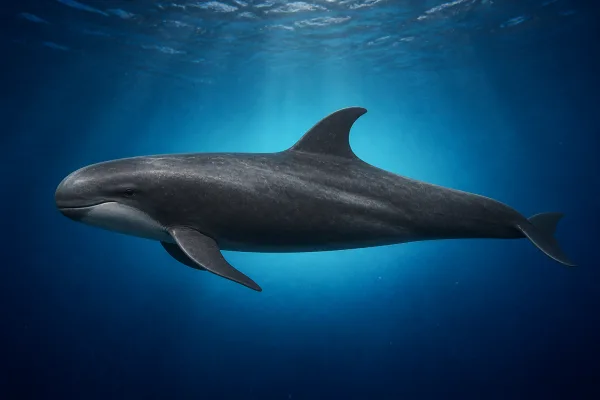
Toothed Whales & Dolphins False killer whale swimming near the surface, slender and uniformly dark gray with a rounded beakless head, tall curved dorsal fin and bent narrow flippers.

False Killer Whale

Pseudorca crassidens

A large tropical dolphin first described from a fossil skull, known for sharing food with unrelated adults and traveling in groups spread across miles.
Length 12–20 ft Near Threatened
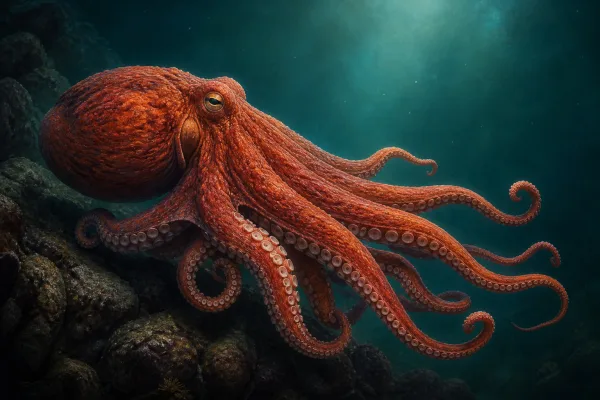
Predatory Cephalopods Giant Pacific octopus on a rocky reef with mottled red-brown skin, raised papillae, and long arms lined with two rows of pale suckers.

Giant Pacific Octopus

Enteroctopus dofleini

The largest octopus known, a cold-water hunter that rewrites the color and texture of its skin and spends its final months guarding one clutch of eggs.
Length 9.8–20 ft Least Concern
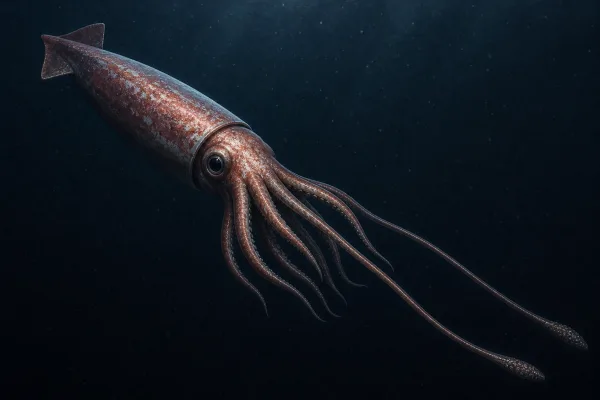
Predatory Cephalopods Giant squid in dark water showing a tapered reddish mantle, triangular fins, eight arms and two much longer feeding tentacles ending in clubbed tips.

Giant Squid

Architeuthis dux

A deep-water squid with the longest reach of any invertebrate, known mostly from strandings, sperm whale stomach contents and a few deep-sea encounters.
Length 16–43 ft Least Concern
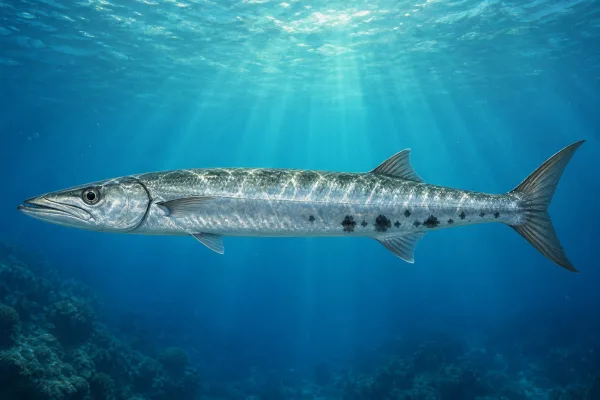
Predatory Fish Great barracuda hovering in clear blue water, a long silver fish with a pointed head, jutting lower jaw, dark flank blotches and a deeply forked tail.

Great Barracuda

Sphyraena barracuda

A silver reef ambusher that hangs almost motionless above the bottom, then closes on prey in a single short burst of speed.
Length 2–6.6 ft Least Concern
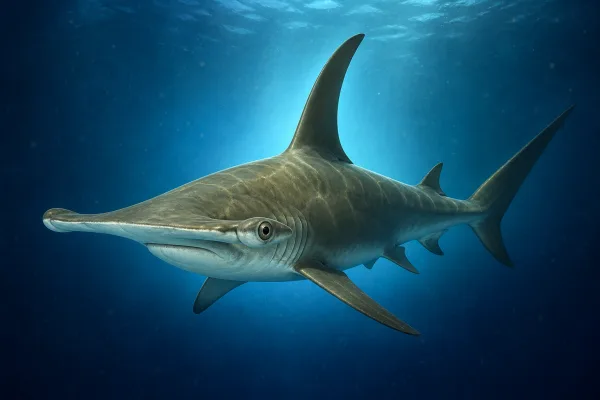
Sharks Great hammerhead shark seen from above, showing the wide flat cephalofoil with eyes at the tips and a very tall, curved first dorsal fin.

Great Hammerhead Shark

Sphyrna mokarran

The largest hammerhead, whose broad wing-shaped head spreads its electrical sensors wide and helps it find stingrays buried in sand.
Length 7.5–20 ft Critically Endangered
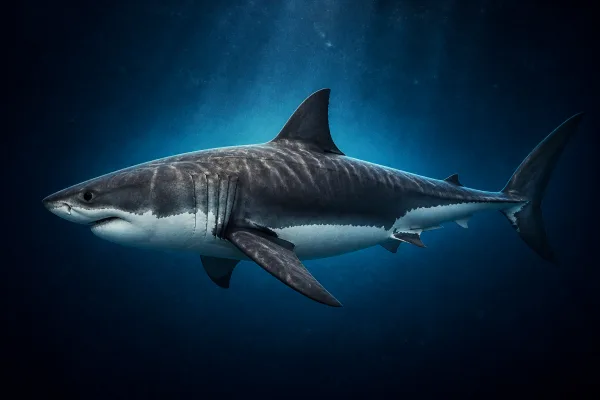
Sharks Great white shark seen from the side in open blue water, showing its conical snout, dark gray back and white underside.

Great White Shark

Carcharodon carcharias

A warm-bodied ambush hunter that patrols temperate coasts and crosses entire ocean basins between seal colonies and offshore feeding grounds.
Length 11–20 ft Vulnerable
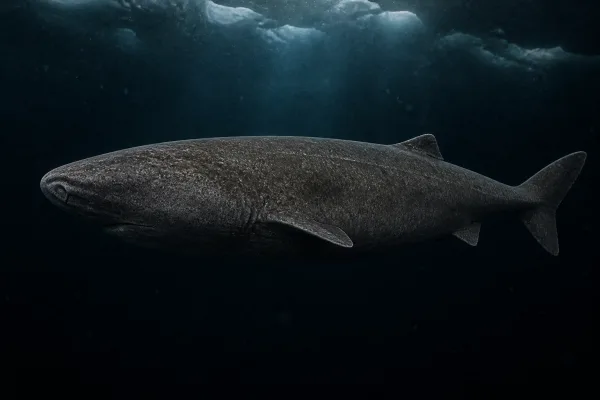
Sharks Greenland shark near the seafloor in dark cold water, showing its bulky brownish-gray body, small rounded snout and tiny low dorsal fins.

Greenland Shark

Somniosus microcephalus

A slow-moving Arctic and deep-water shark whose eye-lens radiocarbon dating points to lifespans measured in centuries rather than decades.
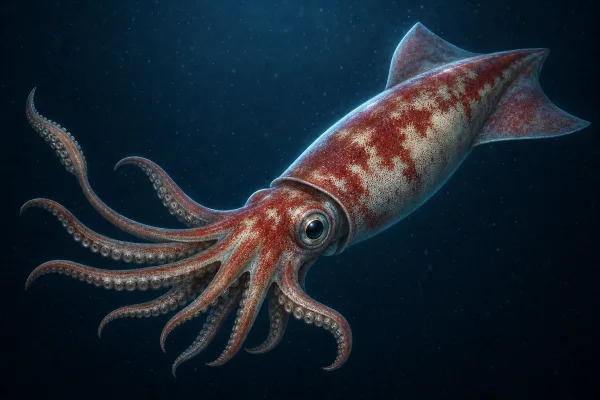
Length 7.9–21 ft Vulnerable
Predatory Cephalopods Humboldt squid in open water with a muscular reddish mantle, triangular fins, ten arms and tentacles spread wide, and pale bands flickering across the skin.

Humboldt Squid

Dosidicus gigas

A fast-growing eastern Pacific squid that hunts in shifting groups, flickers red and white while feeding, and supports the largest invertebrate fishery on Earth.
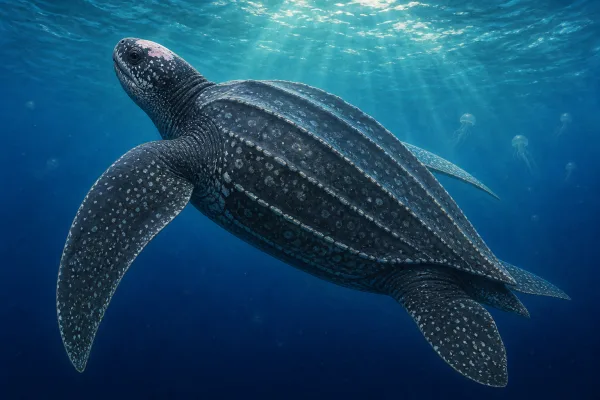
Length 2–6.6 ft Data Deficient
Other Ocean Hunters A leatherback sea turtle swimming in open blue water, its dark blue-black skin flecked with pale spots and its ridged, teardrop-shaped carapace tapering to a point.

Leatherback Sea Turtle

Dermochelys coriacea

The largest and deepest-diving turtle, a warm-bodied ocean wanderer that lives almost entirely on jellyfish and other gelatinous drifters.
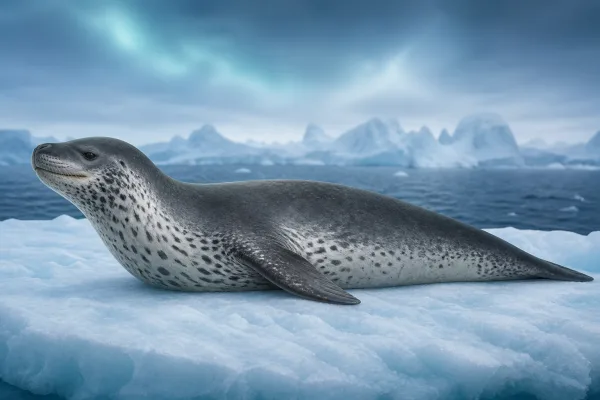
Length 4.3–7.2 ft Vulnerable
Seals, Sea Lions & Walruses A leopard seal turning through cold blue Antarctic water beneath a pale ice floe, its long spotted body and wide head angled toward the camera with the mouth slightly open.

Leopard Seal

Hydrurga leptonyx

The only seal that routinely hunts warm-blooded prey, patrolling Antarctic pack ice for penguins and young seals while also filtering krill through lobed teeth.
Length 7.9–11 ft Least Concern
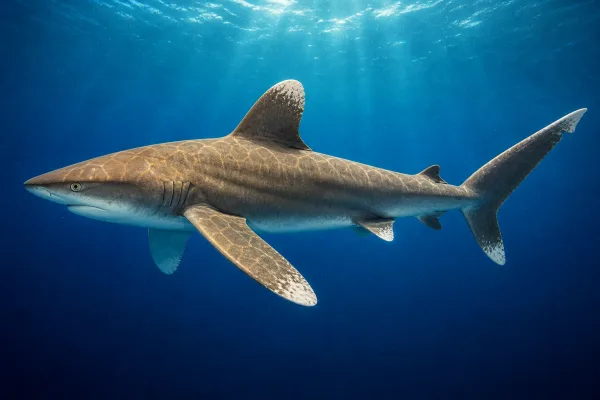
Sharks Oceanic whitetip shark in blue water, showing its long paddle-shaped pectoral fins and rounded first dorsal fin with mottled white tips.

Oceanic Whitetip Shark

Carcharhinus longimanus

A wandering open-ocean shark with long rounded fins tipped in white, once among the most abundant large animals in tropical seas.
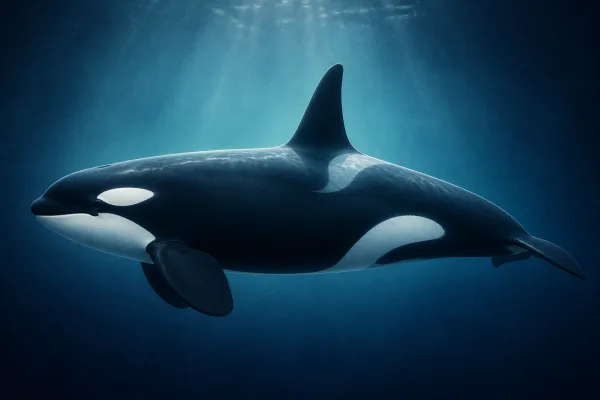
Length 5.9–11 ft Critically Endangered
Toothed Whales & Dolphins Adult orca surfacing in cold coastal water, showing its glossy black back, tall triangular dorsal fin, white oval eye patch and gray saddle.

Orca

Orcinus orca

The most widely distributed wild mammal after humans, living in matrilineal groups that pass down dialects, diets and hunting techniques.
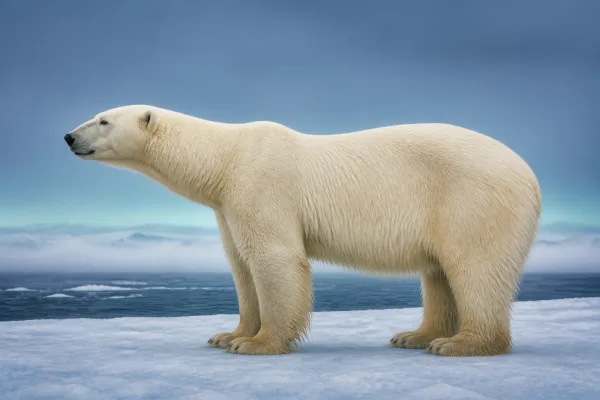
Length 18–30 ft Data Deficient
Other Ocean Hunters A polar bear with thick cream-white fur, a long neck and small rounded ears standing on pack ice, its black nose and dark eyes clearly visible.

Polar Bear

Ursus maritimus

A sea-ice hunter classified as a marine mammal, the largest living bear, and almost entirely dependent on frozen ocean for its food.
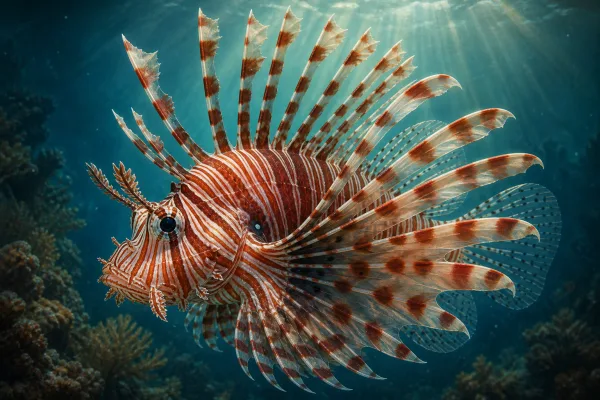
Length 5.9–9.8 ft Vulnerable
Predatory Fish Red lionfish above coral, showing red-brown and white banded body, long venomous dorsal spines and wide fan-shaped striped pectoral fins.

Red Lionfish

Pterois volitans

A venomous Indo-Pacific ambush hunter, now established across the western Atlantic, that stalks small reef fish behind a fan of striped fins.
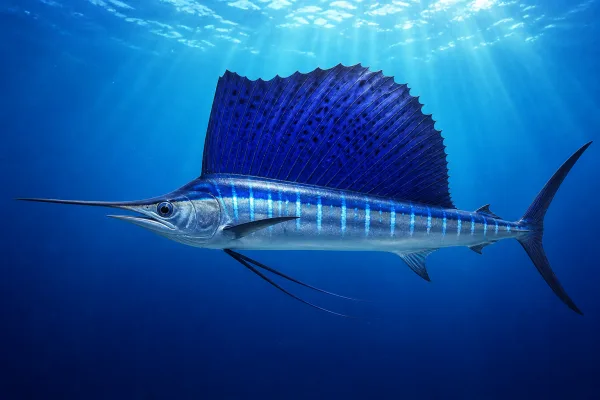
Length 5.9–19 in Least Concern
Predatory Fish Sailfish in sunlit blue water with its tall blue-black dorsal sail raised, showing a long slender bill, silver flanks and faint vertical bars.

Sailfish

Istiophorus platypterus

A slender billfish with an enormous folding dorsal sail that hunts sardine schools in groups, tapping and slashing prey with its bill.
Length 4.9–11 ft Least Concern
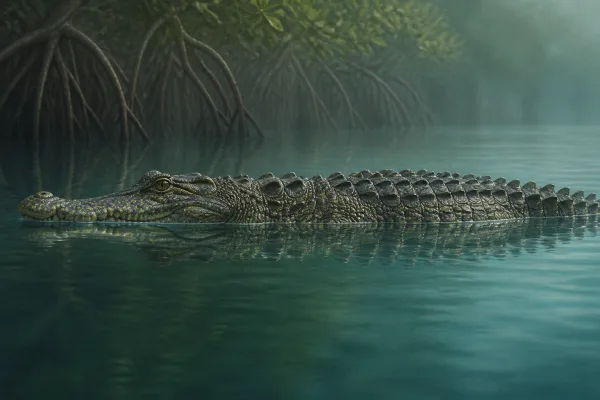
Marine Crocodilians Saltwater crocodile floating at the surface of a muddy estuary, showing a broad heavy snout, raised eyes and nostrils, and rows of dark scutes along its back.

Saltwater Crocodile

Crocodylus porosus

The largest living reptile, an estuarine ambush predator that tolerates seawater and times long ocean journeys to the tides.
Length 8.2–20 ft Least Concern
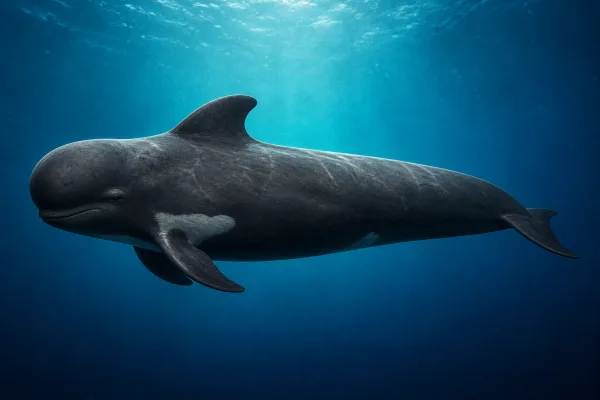
Toothed Whales & Dolphins Short-finned pilot whale at the surface, dark charcoal body with a bulbous rounded forehead, thick tail stock and a low broad-based dorsal fin set well forward.

Short-finned Pilot Whale

Globicephala macrorhynchus

A deep-diving squid hunter whose members stay in their mother's group for life and whose females live for decades after their last calf.
Length 11–24 ft Least Concern
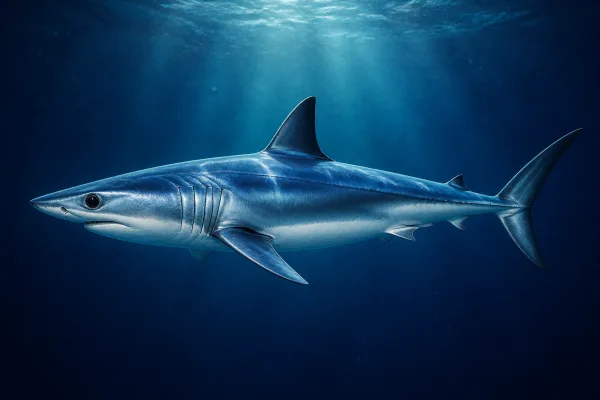
Sharks Shortfin mako shark in open water, showing its pointed snout, deep metallic blue back, white belly and stiff crescent-shaped tail.

Shortfin Mako Shark

Isurus oxyrinchus

A warm-bodied oceanic shark built for speed and sustained cruising, and one of the fastest fish for which reliable measurements exist.
Length 5.9–13 ft Endangered
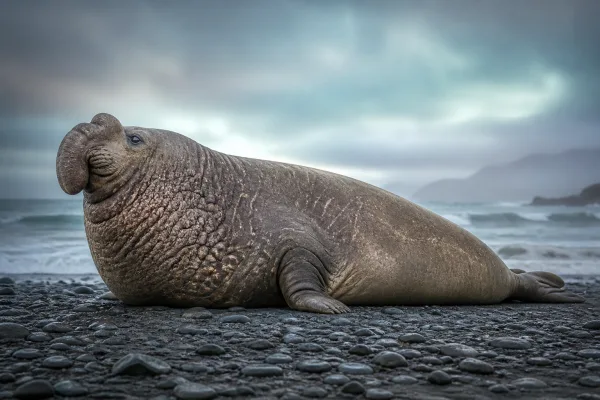
Seals, Sea Lions & Walruses An enormous southern elephant seal bull on a grey sub-Antarctic beach, head raised and inflated proboscis hanging over its open mouth, with scarred folds of skin across its chest.

Southern Elephant Seal

Mirounga leonina

The largest seal on Earth and the most extreme diver among them, with bulls several times the mass of females and dives that pass a mile below the surface.
Length 8.5–20 ft Least Concern
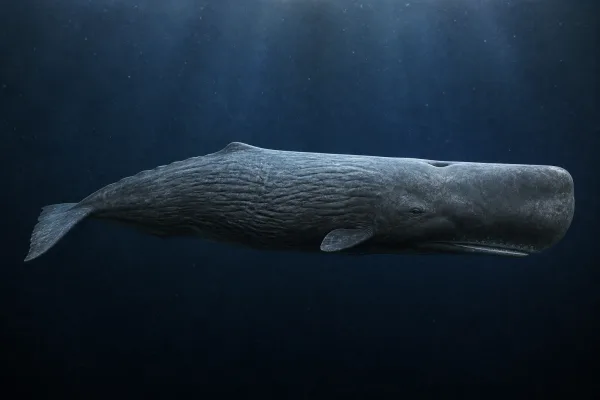
Toothed Whales & Dolphins Sperm whale at the surface showing its enormous square gray head, wrinkled skin, single blowhole set forward on the left, and low dorsal hump.

Sperm Whale

Physeter macrocephalus

The largest toothed predator on Earth, carrying the biggest brain and the loudest voice of any animal inside a nose that fills a third of its body.
Length 28–52 ft Vulnerable
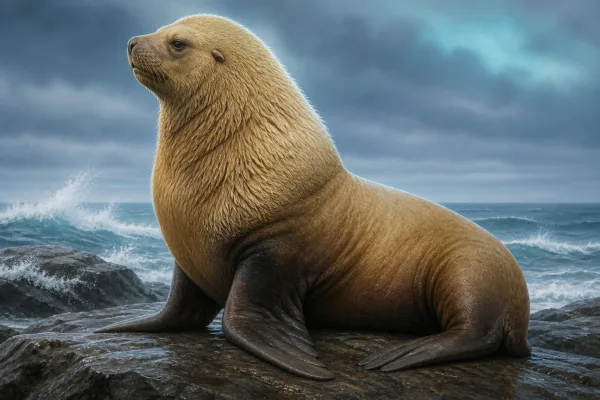
Seals, Sea Lions & Walruses A large male Steller sea lion on a wave-washed rocky haulout in the North Pacific, its thick pale mane and broad muzzle raised as it roars, with surf breaking behind it.

Steller Sea Lion

Eumetopias jubatus

The largest of the sea lions, a heavy-maned North Pacific hunter whose western population collapsed by around eighty percent for reasons still argued over.
Length 7.5–11 ft Near Threatened
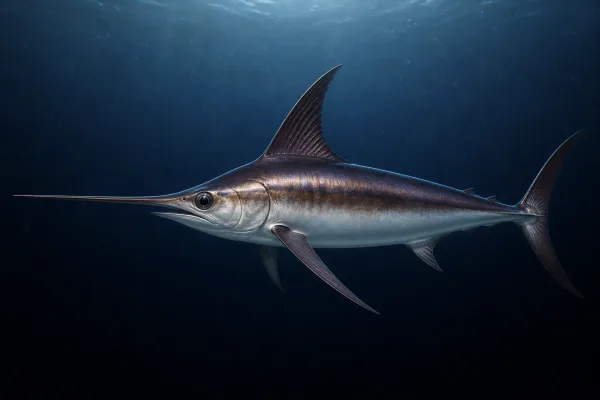
Predatory Fish Swordfish in dark open water, showing its long flattened bill, large round eye, tall stiff dorsal fin and dark bronze-brown back fading to a pale belly.

Swordfish

Xiphias gladius

A deep-diving billfish that warms its brain and eyes, hunts squid in near-freezing darkness, and slashes rather than spears its prey.
Length 3.9–15 ft Least Concern
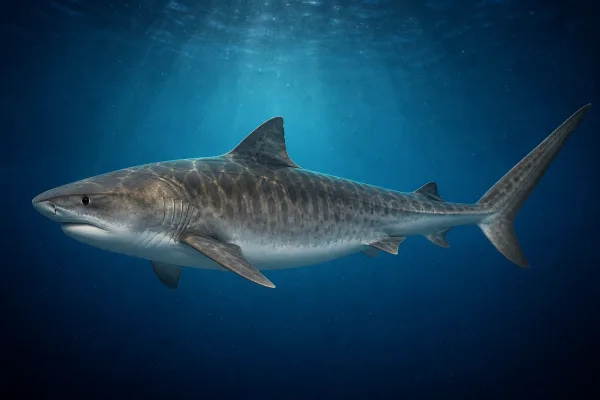
Sharks Tiger shark swimming in clear blue water, showing its blunt broad snout, gray-brown back and faded dark vertical bars along the flanks.

Tiger Shark

Galeocerdo cuvier

A broad-ranging coastal shark with the widest diet of any large shark, from sea turtles and seabirds to rays, squid and carrion.
Length 9.8–18 ft Near Threatened
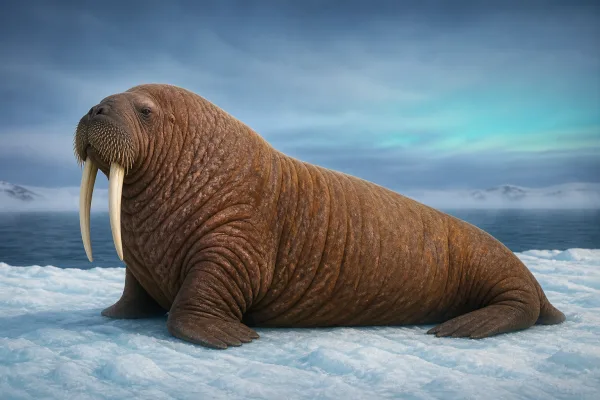
Seals, Sea Lions & Walruses A walrus resting at the edge of an Arctic ice floe, its long pale tusks and dense bristly whiskers prominent against deeply wrinkled reddish-brown hide.

Walrus

Odobenus rosmarus

An Arctic bottom-feeder that finds clams in darkness with a muzzle full of whiskers and pulls them from the shell by suction, not with its famous tusks.

Length 7.2–12 ft Vulnerable