Overview
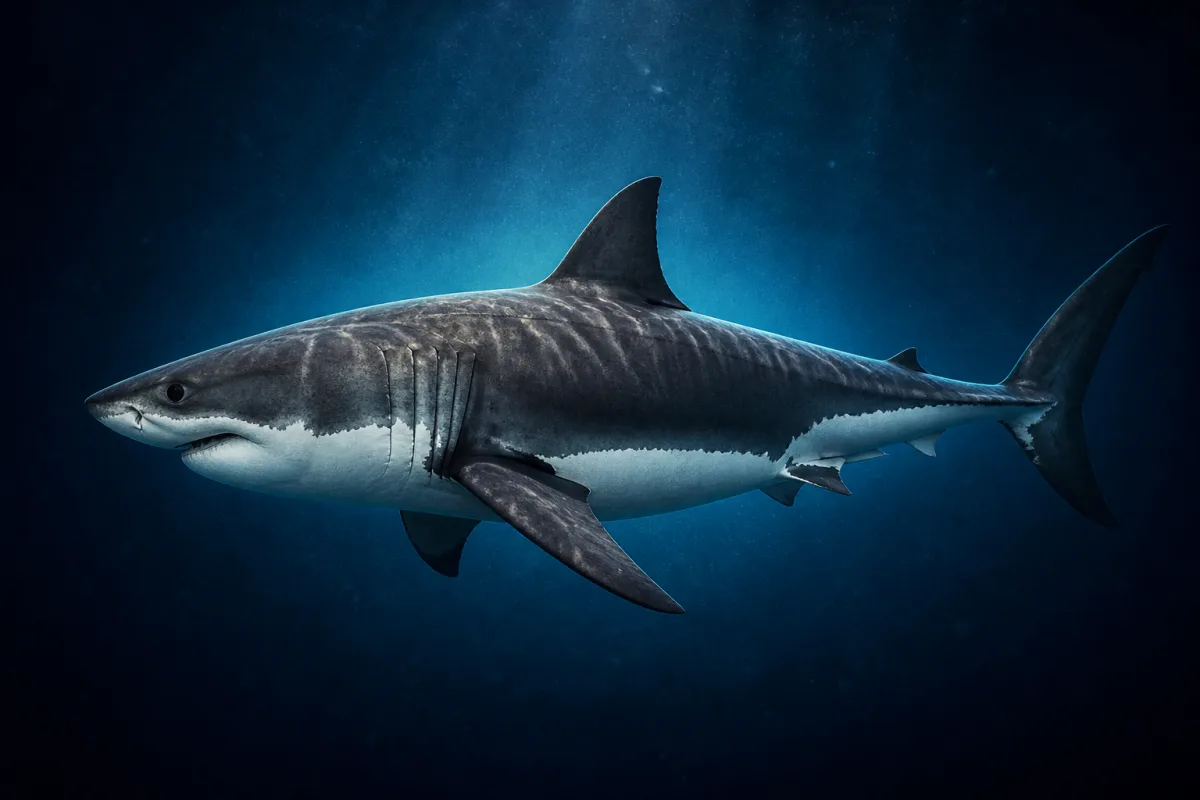
The great white shark is the largest predatory fish that hunts warm-blooded prey, and the best studied of the mackerel sharks. Mature females are considerably larger than males, and the biggest reliably measured individuals approach 20 feet. Reports of much larger animals are common but rarely survive scrutiny, because length is easy to overestimate at sea and shrinkage or stretching distorts measurements taken on land.
Unlike most fish, white sharks are regional endotherms. A counter-current heat exchanger in the bloodstream keeps the swimming muscles, stomach, brain and eyes several degrees warmer than the surrounding water. That warmth buys sustained cruising power in cold seas, which is why the species thrives off California, South Africa, southern Australia and New England rather than in the tropics.
Satellite tagging has rewritten what we know about their movements. Individuals shuttle between coastal pinniped colonies in the cooler months and open-ocean areas far offshore, with some crossing between Australia and South Africa or spending months in a mid-Pacific region known informally as the white shark cafe. The same animals return to the same coastal sites year after year, which makes local protection meaningful.
Where it lives
Temperate and subtropical continental shelves worldwide, with well-known concentrations off central California, Guadalupe Island, the northeastern United States, South Africa, southern Australia, New Zealand, Japan and the Mediterranean. The species is scarce in equatorial waters and absent from polar seas.
Habitat
- Coastal waters
- Continental shelf
- Kelp forests & rocky reefs
- Open ocean
- Seamounts & offshore banks
What it eats
Diet shifts with age. Juveniles under about 10 feet take fish, rays and smaller sharks, because their jaws and teeth are not yet built for large struggling prey. Adults add seals, sea lions and small cetaceans, and readily scavenge whale carcasses, which offer an enormous energy return for no risk.
- Marine mammals
- Bony fish
- Sharks & rays
- Carrion & whale falls
How it hunts
Great whites hunt by ambush from below, using a dark dorsal surface against the seafloor and a pale belly against the light. At seal colonies they patrol deep water and strike upward in a single high-speed rush that sometimes carries them clear of the surface. Against tougher prey they use a bite-and-wait approach, releasing the animal after an initial wound and returning once it weakens. This reduces the chance of injury from teeth, claws or flukes.
Behavior
Social structure: Mostly solitary
Usually encountered alone, but the species is far from asocial. Sharks gather at productive sites and sort themselves into a size-based feeding order, with larger animals displacing smaller ones. Individuals off Guadalupe Island have been recorded repeatedly in the company of the same associates.
Active period: Day & night
Active around the clock, with a clear peak in the first hours after sunrise when low light favors an ambush from below.
Reproduction
Live birth, egg-eating embryos.
Embryos develop inside the mother without a placenta and consume unfertilized eggs supplied by her, a strategy called oophagy. Gestation is thought to last more than a year, producing 2 to 10 well-developed pups roughly 4 feet long. No pregnant female has ever been studied in detail, so much of this remains inferred.
Predators and ecological role
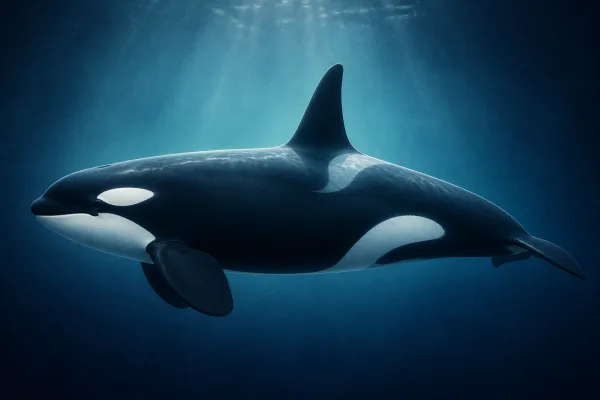
Adults have effectively no predators other than orcas, which have been documented killing white sharks and driving them off aggregation sites for months. Juveniles are vulnerable to larger sharks, including adult white sharks.
As an apex predator, the great white shapes where and how seals and sea lions forage, an effect that ripples down to the fish those pinnipeds eat. By removing sick and injured animals and consuming whale falls, it also recycles energy that would otherwise be lost from the system.
Conservation and threats
Vulnerable Assessed 2018 · population decreasing
Low reproductive output and late maturity make the species slow to recover from losses. It is protected in United States, Australian, South African and New Zealand waters and listed on CITES Appendix II.
Accidental capture in gillnets and longlines is the main pressure, compounded by demand for jaws, teeth and fins. Beach protection programs still kill sharks in some regions. Because white sharks are long-lived and sit at the top of the food web, they also accumulate mercury and industrial contaminants in their tissues.
Main pressures
- Bycatch in other fisheries
- Targeted fishing
- Fin trade
- Chemical pollution
- Depletion of prey
Notable details
- Radiocarbon dating of vertebral growth bands revealed lifespans of at least 70 years, roughly triple what researchers assumed for decades.
- A blood-vessel heat exchanger keeps the stomach and swimming muscles warmer than the surrounding sea, allowing sustained hunting in cold water.
- Teeth are replaced continuously throughout life, so a single shark sheds thousands of them.
- Electroreceptors in the snout detect the faint electric fields produced by muscle activity, letting a shark locate prey it cannot see.
Sources
-
The IUCN Red List of Threatened Species
International Union for Conservation of Nature
Global conservation assessments, population trends and threat classifications for every species profiled here.
-
Species Directory
NOAA Fisheries
Management-grade biology, distribution and stock information for species in United States waters.
-
Florida Program for Shark Research
Florida Museum of Natural History
Shark biology, size records and documented interaction data.
-
Smithsonian Ocean
Smithsonian National Museum of Natural History
Peer-reviewed public science writing on marine life, ecosystems and ocean change.
-
FishBase
FishBase Consortium
Compiled length, weight, growth and depth records for fish species, drawn from the primary literature.
Figures on this page were last checked against these sources on .