Overview
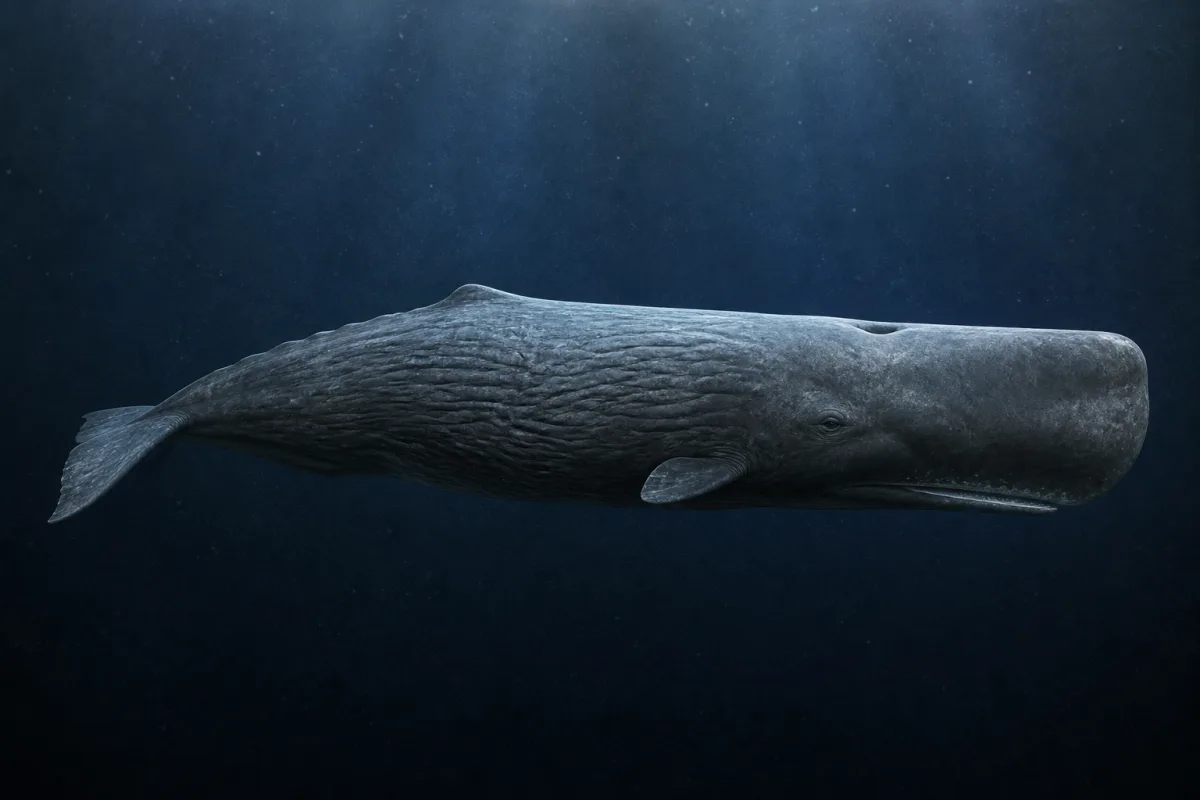
The sperm whale is the largest toothed predator alive and the most extreme case of sexual size difference among whales. Females mature at around 36 feet and 15 tons. Large males reach roughly 52 feet and can weigh close to three times as much, a gap unmatched in any other cetacean. The blunt, boxy head accounts for about a third of the body and houses the spermaceti organ, a reservoir of waxy oil that shapes and focuses sound. Functional teeth are set only in the narrow lower jaw.
Sperm whales feed in the deep sea, mostly on squid taken between about 1,300 and 4,000 feet. A typical foraging dive lasts around 45 minutes, and tagged animals have been recorded past 6,500 feet. They find prey with clicks generated in the nose, the loudest sounds measured from any animal. Because those clicks are directional and regular, researchers can count whales acoustically, estimate an individual's body length from the spacing within a click, and follow a group for hours without ever seeing it.
Society is divided by sex. Females and their young live in units of about ten that hold together for decades, coordinating care of calves that cannot yet follow their mothers into the deep. Units associate into clans defined by shared patterns of clicks called codas, and clans with different repertoires share the same waters without mixing. Males leave in their teens, drift toward colder and more productive latitudes, and return to the tropics only to breed, spending much of their adult life alone.
Where it lives
Deep water worldwide, from the equator to the edges of the polar ice. Females and young remain in waters generally warmer than 15 degrees Celsius, roughly between 40 degrees north and 40 degrees south. Mature males range far higher and lower in latitude, reaching the Bering Sea and the Antarctic. The species concentrates near submarine canyons, steep shelf edges and areas of upwelling.
Habitat
- Open ocean
- Deep sea
- Continental shelf
- Seamounts & offshore banks
What it eats
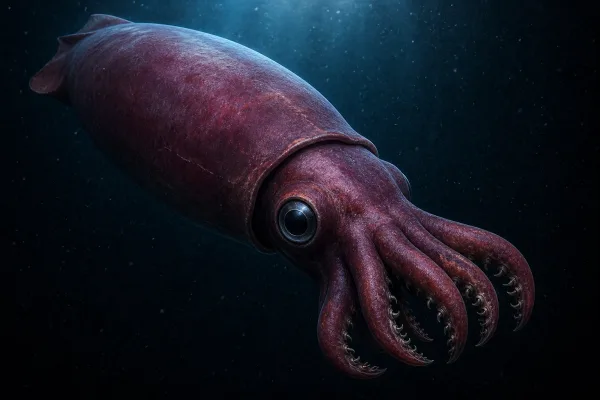
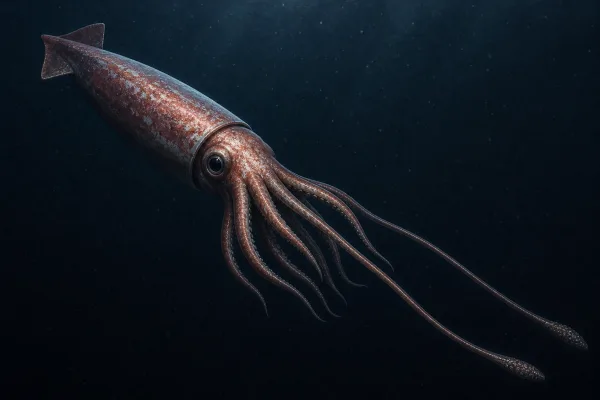
Squid make up the great majority of the diet by number, most of them medium-sized species weighing a few pounds rather than the giant squid that draw attention. Stomach contents also include octopus, deep-water fish such as grenadiers and lanternfish, and occasional skates and small sharks. High-latitude males eat proportionally more fish, and in some regions they take fish directly from longlines.
- Squid & octopus
- Bony fish
- Sharks & rays
How it hunts
Foraging is done in darkness by sound. Descending whales produce slow, regular clicks that scan the water ahead, switching to rapid buzzes in the final seconds before capture. Prey is likely taken by suction rather than by biting, since the lower jaw is narrow and animals with broken or missing jaws have been found in good condition. A single whale may capture dozens of squid on one dive, surfacing afterward for eight or nine minutes of recovery breathing before descending again.
Behavior
Social structure: Stable pods
Females and immature animals form units of roughly six to twelve that can remain stable for decades, and units join temporarily into larger groups. Members take turns staying near the surface with calves while others feed at depth, so a calf is rarely left unattended. Adult males are largely solitary, forming loose bachelor associations when young and traveling alone once mature.
Active period: Day & night
Foraging continues around the clock, since the whales hunt below the reach of sunlight. Rest takes the form of short drift dives during which the animal hangs vertically, motionless, just beneath the surface.
Reproduction
Live birth, milk-fed young.
Gestation lasts roughly 14 to 16 months and produces a single calf about 13 feet long. Nursing continues for at least two years and sometimes far longer, and calves have been observed suckling from females other than their mother. Females give birth once every four to six years and mature at about nine years; males are physically mature closer to 30, which is one reason whaling removed large males faster than the population could replace them.
Predators and ecological role
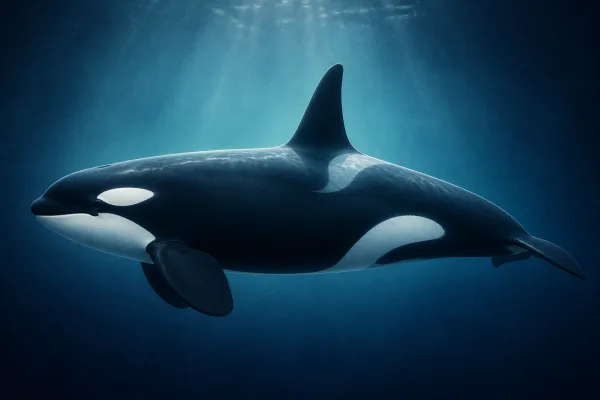
Adults are effectively beyond the reach of predators because of their size. Calves and juveniles left near the surface while adults forage are vulnerable to orcas, and groups respond by gathering tightly with the young in the center. Large sharks scavenge sick or dying animals.
Sperm whales move nutrients vertically. They feed at depth and defecate at the surface, releasing iron-rich waste into sunlit water where it fertilizes plankton growth, an effect measurable in the Southern Ocean. By cropping mid-water squid across every ocean basin they also link the deep sea to surface food webs in a way few other animals do.
Conservation and threats
Vulnerable Assessed 2008 · population unknown
Commercial whaling removed an estimated three-quarters of a million sperm whales in the twentieth century, with the heaviest losses among large males. Recovery has been slow and uneven, and the global population trend is not confidently known. The species has been listed as endangered in United States waters since 1970 and is on CITES Appendix I.
Entanglement in fishing gear and collisions with large vessels are the leading direct causes of death recorded today, particularly along shipping lanes that cross deep-water feeding grounds. Because the species relies on sound for everything from finding squid to keeping a unit together, industrial noise is a serious concern. Plastic bags and sheeting have been recovered from the stomachs of stranded animals in several regions.
Main pressures
- Entanglement in gear
- Vessel strikes
- Underwater noise
- Plastic debris
- Chemical pollution
Notable details
- The sperm whale's brain weighs about 17 pounds, the largest of any animal that has ever lived.
- Its clicks have been measured above 230 decibels, making it the loudest known biological sound source in the ocean.
- Ambergris, long used to fix scent in perfume, forms in the intestine around the indigestible beaks of squid.
- Groups share patterned click sequences called codas, and whales using the same repertoire form clans that span thousands of miles of ocean.
Sources
-
The IUCN Red List of Threatened Species
International Union for Conservation of Nature
Global conservation assessments, population trends and threat classifications for every species profiled here.
-
Species Directory
NOAA Fisheries
Management-grade biology, distribution and stock information for species in United States waters.
-
International Whaling Commission
IWC
Cetacean population status, ship-strike and entanglement reporting.
-
Smithsonian Ocean
Smithsonian National Museum of Natural History
Peer-reviewed public science writing on marine life, ecosystems and ocean change.
-
Animal Diversity Web
University of Michigan Museum of Zoology
Referenced accounts of anatomy, reproduction, behavior and life history.
Figures on this page were last checked against these sources on .