The Arctic and the Southern Ocean are the coldest, most seasonal and in some ways most productive seas on Earth. Sunlight arrives for a few months and nearly vanishes for the rest. Sea ice grows and melts across millions of square miles. In that rhythm a short bloom of algae feeds a very large amount of life, and a distinctive set of predators has organized itself around the ice edge.
The Arctic is an ocean surrounded by land, and the Antarctic is a continent surrounded by ocean. That difference shapes who lives where: polar bears in the north and no land predator at all in the south, walruses in the Arctic and leopard seals in the Antarctic. This guide compares the two regions, follows the main food chains, and looks at what thinning ice means for each animal.
Two Poles, Two Different Systems
The Arctic Ocean is a mostly enclosed basin ringed by continents, with shallow shelf seas around its edge. Its sea ice drifts and recirculates, and a share of it survives the summer as thick multi-year ice. Land predators such as polar bears can walk onto the ice from shore, and seabirds and mammals shuttle between land and ice.
Antarctica is a high, frozen continent surrounded by the Southern Ocean and its circumpolar current. Sea ice there is almost entirely seasonal, growing in winter to cover millions of square miles and retreating almost completely in summer. No land mammals live on the continent. Every large predator is a bird or marine mammal that feeds in the water and breeds on ice or on the shore.
Why Cold Seas Are So Productive
Cold water holds more dissolved gas and, in polar regions, stirs vigorously, bringing nutrients to the surface. When spring sunlight returns, algae growing on the underside of the ice and in the open water at its edge bloom in a pulse. Krill in the Southern Ocean and small crustaceans in the Arctic graze the bloom and in turn feed fish, squid, seabirds and seals.
Because the season is short, polar animals store energy. They are large, fat and slow to reproduce. Many produce a single young and invest heavily in each one, a strategy that works in a stable environment and is risky in a changing one.
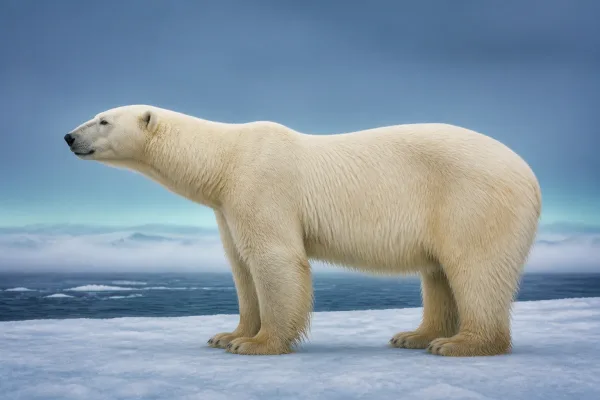
The Polar Bear: A Marine Mammal That Walks
The polar bear is classified as a marine mammal because it depends on the sea ice. It hunts mainly ringed and bearded seals, waiting at breathing holes or at the edge of the ice and ambushing seals as they surface, or stalking those hauled out to rest. Fat-rich seal blubber is its main food, and a successful bear can take in a very large share of its yearly energy in the spring and early summer, when seal pups are available.
That dependence is the source of the species' difficulty. As ice forms later and breaks up earlier in many regions, bears lose hunting time on the ice and spend longer ashore on stored fat. Studies of several populations show lower body condition and poorer survival of cubs in the areas with the greatest losses of ice. The polar bear is listed as Vulnerable, with the sea ice decline named as the principal long-term threat.
Walruses and the Seafloor
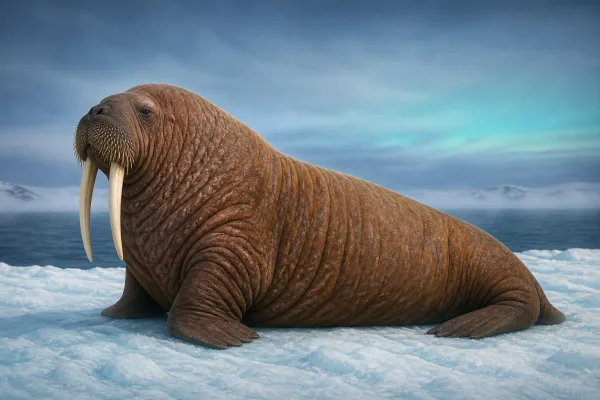
The walrus is a feeder of a different kind. Adult walruses dive to the seafloor of shallow shelf seas and use their whiskers, lips and powerful suction to extract clams, worms and other bottom animals from the sediment. Their tusks, grown by both sexes, are used to haul the animal onto ice, to establish rank, and in defense, not primarily for digging.
Walruses rest on sea ice between dives, close to feeding areas. When summer ice retreats beyond the shallow shelf, females and calves may crowd onto coastal beaches in large numbers, a situation that raises the risk of stampedes and puts them farther from food. The dependence on a platform near the feeding grounds is a reason walruses are monitored closely.
Leopard Seals and the Antarctic Ice Edge
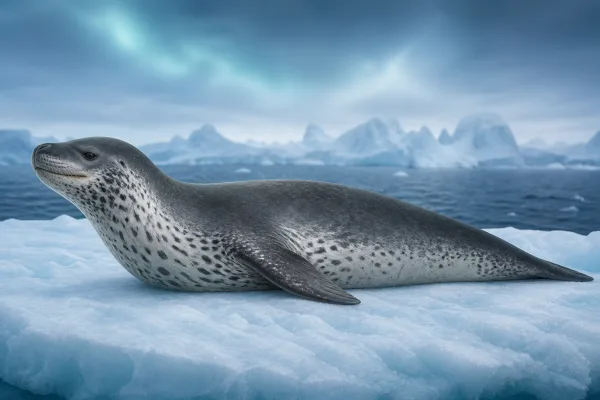
The leopard seal is the main marine mammal predator on warm-blooded prey in the Antarctic. Long, sinuous and equipped with large jaws and a mix of cutting and sieving teeth, it takes krill, fish, penguins and the pups of other seals. It patrols the ice edge where penguins enter the water, and it will wait just offshore of a colony and ambush birds that dive in.
Leopard seals are solitary and widespread, and their numbers are hard to count because they spend time under and on pack ice that is difficult to survey. They are listed as Least Concern, and their presence across much of the Southern Ocean means that they track the ecosystem as a whole.
Emperor Penguins: Hunters and Prey at Once
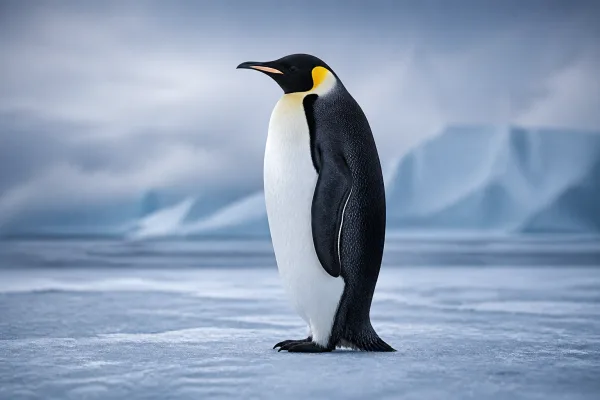
The emperor penguin is a predator of fish, squid and krill, and also the prey of leopard seals and orcas. It dives deeper than any other bird, reaching more than 1,500 feet and staying down for over twenty minutes, and it breeds on sea ice through the Antarctic winter, when males huddle in groups to incubate a single egg for two months while the females feed at sea.
The species depends on stable fast ice, the ice attached to the coast, for breeding. If the ice breaks up before chicks fledge, the chicks can drown. Satellite surveys of colonies have recorded complete breeding failures in recent years in regions where ice broke up early, and the species is listed as Near Threatened.
Orcas: Ecotypes of the Ice
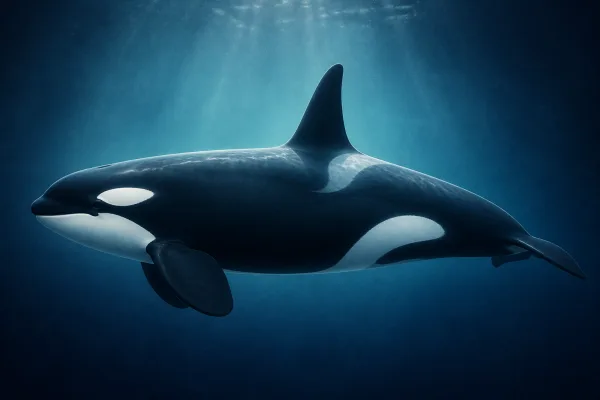
Orcas live in both polar regions and in the Antarctic have been divided into several forms with different habits. One type hunts seals and swims in coordinated groups that create waves to wash a seal off an ice floe. Another feeds on Antarctic toothfish. A smaller form eats mostly fish in open water. In the Arctic, orcas have extended their range northward as ice has declined and are now seen hunting in waters that once were closed by ice for most of the year.
This movement is an example of how change in one part of the system can ripple through the rest. Orcas are a new source of mortality for narwhals, belugas and bowhead whales in regions where they were previously rare, and the whales have in turn been observed to shift into ice-covered areas to avoid them.
The Greenland Shark: Slow Life in the Cold
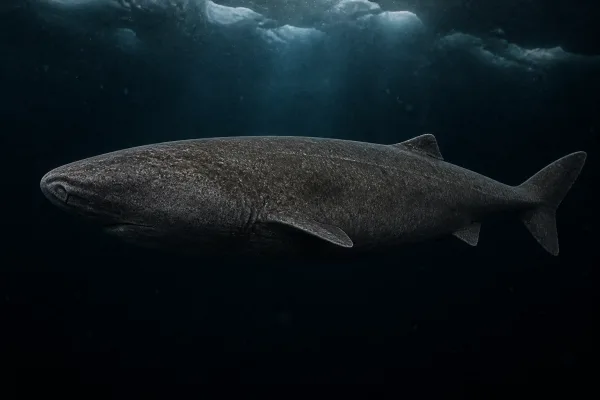
The Greenland shark is the largest fish in the Arctic and one of the longest-lived vertebrates known. Estimates based on eye lens radiocarbon dating suggest that some animals live for several centuries, and that females may not breed until they are well over a century old. It swims at a fraction of the speed of a mako, feeding on fish, seals and carrion at depths of several hundred to over a thousand yards.
It is the prime example of a polar strategy built on patience. In water barely above freezing, metabolism is slow, growth is slow and the interval between generations is very long. That makes the species slow to recover from losses and is the reason it is listed as Vulnerable despite its low profile.
What a Warming Pole Changes
The Arctic is warming several times faster than the global average, and summer sea ice there has declined substantially since satellite records began in 1979. Around the Antarctic Peninsula and some other regions, warming and ice loss have also been strong, though the pattern across the whole of Antarctic sea ice has been more variable, and has reached record lows in recent years.
The animals most affected are those that use ice as a platform: for hunting, resting or breeding. Those with more flexible diets and habitats, such as orcas, are expanding. The result is a reshuffling of who eats whom, not a simple loss of one set of predators.
Pressures on polar predators
- Loss and earlier breakup of sea ice, which removes platforms for hunting, resting and breeding.
- Shifts in prey, including changes in the timing and distribution of krill and fish.
- Pollution, with persistent chemicals concentrating in long-lived animals high in the food web.
- Growing ship traffic, noise and the risk of spills as Arctic routes open.
- Fishing for the same krill and fish that wildlife depends on.
Sources
-
National Snow and Ice Data Center
NSIDC
Sea ice extent and trend data underlying polar habitat descriptions.
-
British Antarctic Survey
Natural Environment Research Council
Antarctic field research on seals, penguins and Southern Ocean food webs.
-
U.S. Geological Survey
USGS
Long-term research programs, including polar bear population and sea ice studies.
-
U.S. Fish & Wildlife Service
USFWS
Listing decisions and recovery planning for protected marine and coastal species.
-
The IUCN Red List of Threatened Species
International Union for Conservation of Nature
Global conservation assessments, population trends and threat classifications for every species profiled here.
Figures on this page were last checked against these sources on .