Water is a hard place to find anything. Light is absorbed within a few hundred feet, particles scatter whatever light remains, and a hungry animal has to locate food that may be a mile away, hidden in the dark, or buried in sand. Ocean predators have answered that problem with a wider range of senses than any group of land animals, including some that humans have no equivalent for at all.
This guide sorts those senses by the job they do, from long-range detection of a distant scent to the last few inches of a strike. It matters for more than curiosity. A predator's sensory toolkit explains why it hunts at dusk, why it follows certain currents, why ship noise harms whales, and why a shark can find a fish that has stopped moving.
Why the Ocean Is Hard to Sense
Sound travels about four and a half times faster in seawater than in air and loses little energy over distance, which makes it the best long-range signal the ocean offers. Chemicals dissolve and drift, so a scent can carry a message along a current for miles, but only in the direction the water is moving. Light is the weakest channel. Red wavelengths vanish within roughly fifty feet, and in clear open water almost no sunlight remains below about 650 feet.
Each sense therefore has a working range, and most predators combine several of them in sequence. A typical hunt moves from a long-range cue such as sound or scent, to a mid-range cue such as vibration or vision, to a short-range cue such as electrical fields or touch. The sections below follow that order.
Rough working ranges
- Hearing and echolocation: from a few feet out to many miles, depending on frequency.
- Smell: as far as a current carries a plume, often hundreds of yards to miles.
- Vision: tens of feet in turbid coastal water, up to a few hundred in clear water.
- Pressure and vibration sensing: about one to two body lengths.
- Electroreception: a few inches to a foot or two.
Smell: Following a Chemical Trail
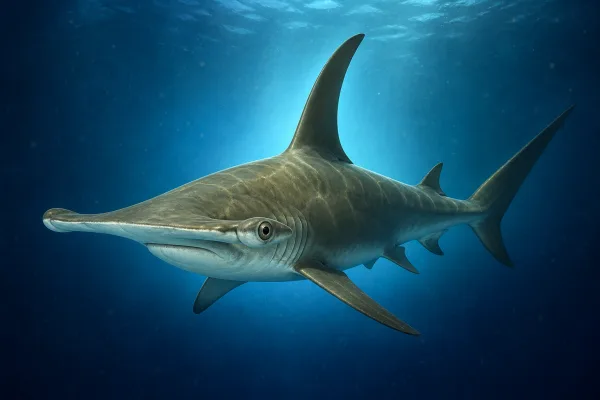
Sharks devote a large share of their brain to the olfactory bulbs, and each nostril sits in a pit that water flows through as the animal swims. They do not smell in the sense of breathing air across a membrane. Water passes over folded sensory tissue and the animal samples it continuously. Because the left and right nostrils are separated by the snout, a shark can compare the arrival time and strength of a scent between them and turn toward the stronger side, which is why hammerhead sharks, with nostrils set far apart on a wide head, are often cited as good trackers.
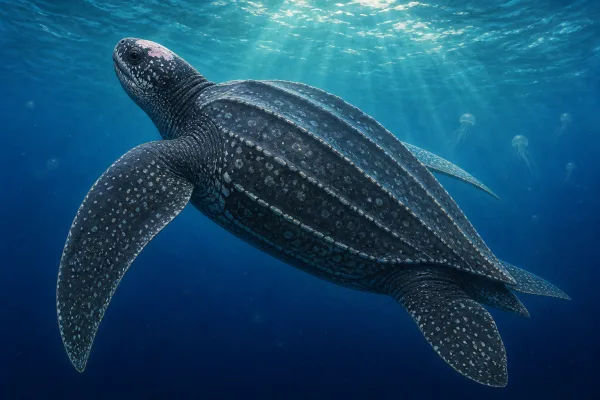
Smell is a slow and indirect signal. A plume from an injured fish or a seal carcass spreads and thins, and the predator has to work upstream through patchy odor, turning back when the signal fades. Scent is mainly useful for locating general areas of food, and it is often the first cue in a sequence rather than the last. Many bony fishes and some sea turtles also track chemical cues over long distances, and leatherback turtles are thought to find jellyfish aggregations partly through odor.
Vision: Sensitivity Over Sharpness
Eyes in the sea are tuned for dim, blue-green light. Many sharks and deep-water fish carry a reflective layer behind the retina, the tapetum, that sends light through the sensitive cells a second time and improves vision at low light levels. Cat-like pupils in some sharks, round pupils in others, and in squid a distinctive dumbbell-shaped pupil all control how much light reaches the retina in conditions that change by orders of magnitude between noon and midwater.
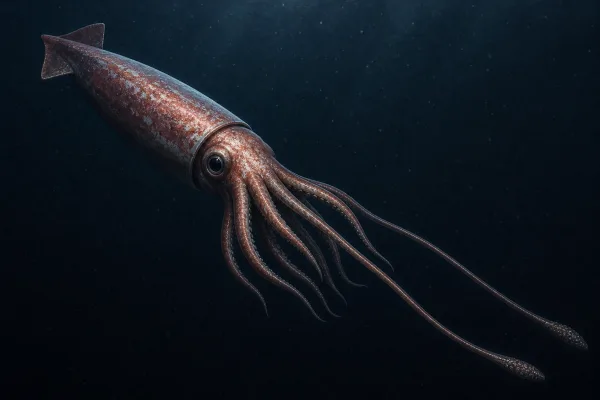
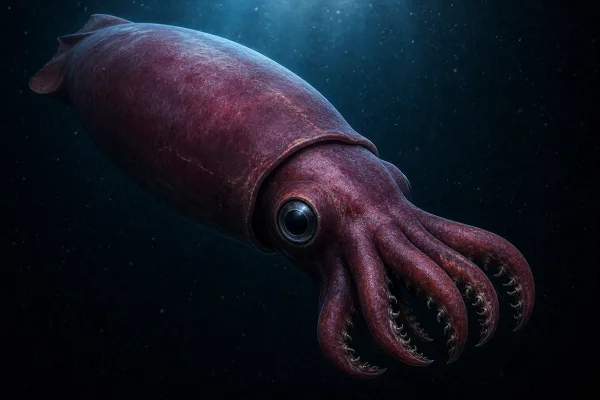
The largest eyes on Earth belong to squid. The colossal squid and the giant squid have eyes roughly the size of a dinner plate or larger, and the extra size is not for sharpness. Work on the giant squid has proposed that big eyes allow it to detect the faint glow produced by a sperm whale moving through bioluminescent plankton from a long way off, giving it time to flee. If that is right, the largest eye in the animal kingdom evolved mainly as an alarm system rather than a hunting tool.
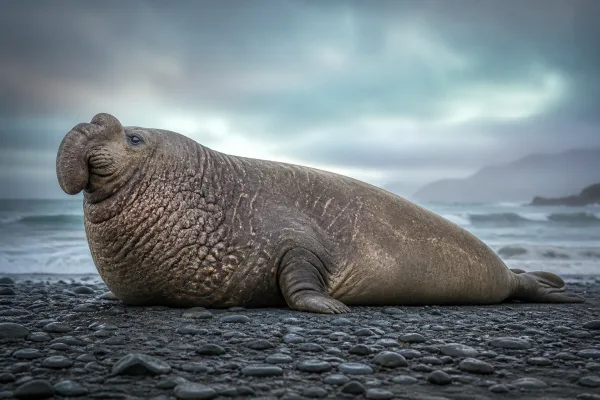
Most whales and dolphins, and the seals that dive deep, rely on vision more than their reputation suggests. Elephant seals have enormous eyes and very sensitive retinas for hunting in near darkness at depths of several hundred yards.
Hearing and Echolocation
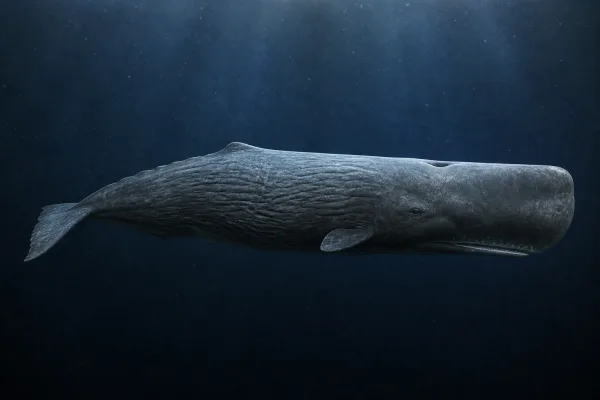
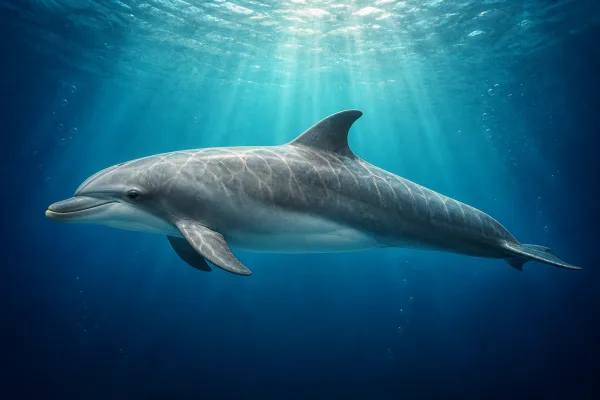
Toothed whales, including sperm whales, orcas and dolphins, produce sharp clicks in a structure in the forehead called the melon and read the echoes that return. The echo carries the distance, size, shape and often the internal structure of an object. A bottlenose dolphin can distinguish objects that differ only in material, and a sperm whale's clicks, among the loudest sounds made by any animal, can locate squid at ranges of hundreds of yards in total darkness.
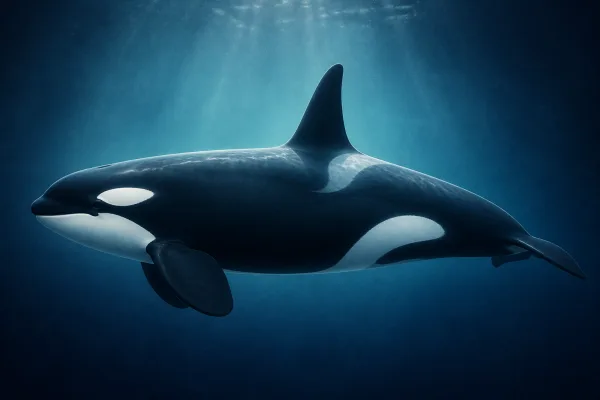
Echolocation has a cost. A click announces the hunter to everything that can hear it. Orcas that eat other marine mammals mostly stay silent while searching and rely on listening for the sounds of their prey, whereas fish-eating orcas click almost constantly. The same logic explains why mammal-hunting groups are small and fish-hunting groups can be large and loud.
Sharks and fishes hear through the inner ear and through the lateral line, and they are sensitive to low-frequency sound. Irregular, low-pitched pulses, such as those produced by a struggling fish, attract sharks from a distance. This is one reason underwater noise and construction can change how predators move through an area.
The Lateral Line: Feeling Water Move
Fish and some amphibious animals carry a row of tiny pressure-sensing organs along the flanks and across the head. Called the lateral line, this system detects small movements and pressure changes in the water around the body. It allows a shark to sense the wake of a swimming fish, the beat of a tail or a struggling animal, and to orient on it even when it cannot see.
The lateral line is a close-range sense, effective over about one to two body lengths. Its great advantage is that it works in total darkness and in cloudy water, so it supplies the final directional information in an attack. Schooling prey have evolved in response. A fish within a tightly synchronized school moves in step with its neighbors, which blurs the individual signal and makes it harder for a predator to single out one fish.
Electroreception: Sensing a Heartbeat
Sharks, rays and their relatives carry jelly-filled pores on the snout and head, the ampullae of Lorenzini, that detect extremely weak electric fields. Every living animal generates a small field through muscle contraction and the chemistry of its gills and skin. A shark can detect that field from the last few inches, which lets it find a flatfish buried in sand or complete a strike on a thrashing fish when its eyes are covered by the protective membrane that closes during a bite.
The hammerhead's wide head is thought to be an adaptation that spreads sensory pores across a larger area, sweeping the seabed as the animal swims and improving its ability to find buried stingrays, a favorite prey. Electroreception is also thought to help sharks navigate by sensing the electrical fields created as ocean currents move through Earth's magnetic field, though how much they use it for orientation is still under study.
Whiskers and Touch
Seals, sea lions and walruses carry rows of stiff whiskers, the vibrissae, each richly supplied with nerves. Harbor seals have been shown to follow the hydrodynamic trail left by a swimming fish, a wake that remains detectable for many seconds after the fish has passed, and to track it with their whiskers alone while blindfolded. The whisker structure of seals is shaped so that it does not vibrate in the seal's own flow, which keeps the signal clean.
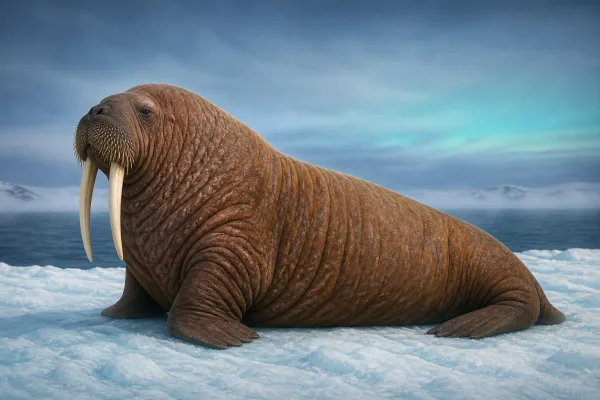
Walruses use their whiskers differently. In the dark sediment of shallow Arctic seas they sweep the seabed for clams and other bottom-dwelling animals, feeling for shells and the shapes of burrows. The whiskers form part of a feeding system that also includes suction produced by the tongue and mouth.
Tactile Hunters in the Dark
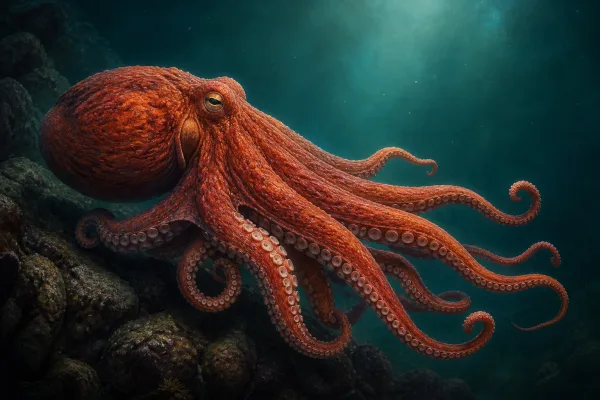
Octopuses and squid have sensory capacities of a different kind. An octopus has hundreds of suckers lined with chemical and touch receptors, so it can taste and feel an object it touches, and much of the processing happens in the arms rather than the central brain. A giant Pacific octopus exploring a crevice learns by touch and taste where prey might be hiding.
Squid combine large, sensitive eyes with statocysts, small organs of balance and motion that also detect low-frequency vibration. Humboldt squid are fast, active hunters that hunt in large groups and signal to one another with rapidly changing patterns of color and flashing, which suggests that vision is also a channel of communication in the dark water where they feed.
Combining Senses Into One Hunt
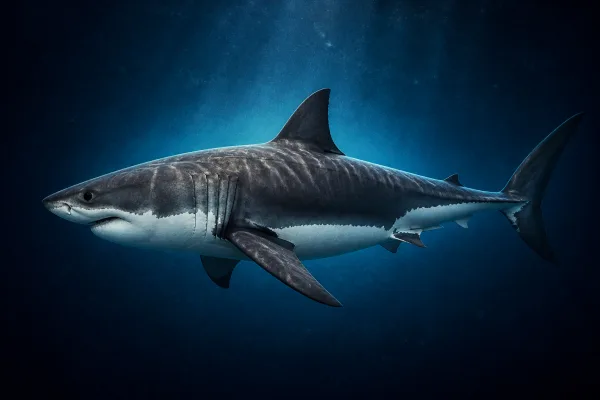
Predators rarely depend on a single sense, and the combination is the key to hunting success. A white shark approaching a seal colony may first pick up the scent and sound of the colony, then switch to vision when the silhouette of a swimming seal appears against the surface, then rely on pressure and electrical senses for the final lunge. An orca working a school of herring uses sound to find the school, vision to herd it, and a tail slap whose effect depends on the hydrodynamic sensitivity of the fish themselves.
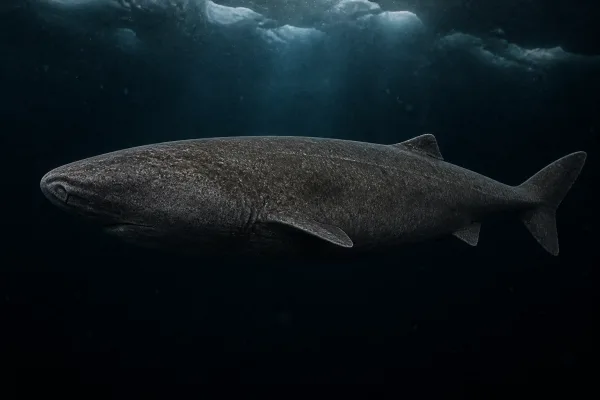
This layering also explains why each species has a recognizable style. Deep, slow hunters such as the Greenland shark lean on smell and ambush. Fast open-ocean hunters such as the swordfish and the bluefin tuna depend on large eyes and speed. Shallow hunters in cluttered habitats, like the goliath grouper in a wreck or the crocodile in a river mouth, rely on pressure and touch because visibility is poor.
Human Noise and the Limits of Adaptation
Senses that evolved over millions of years are now being overlaid by human noise. Shipping, seismic surveys, sonar and construction raise background sound levels across large parts of the ocean, particularly at the low frequencies that large whales use for long-distance communication and that sharks and fish detect through the inner ear. Louder water means a shorter detection range: a killer whale's ability to find a salmon by echolocation falls as vessel noise rises, and studies of populations that share waters with heavy boat traffic show shorter periods of foraging.
The damage is difficult to see because it is indirect. An animal that cannot hear its prey as far away simply spends more time looking and gets less to eat. This is why noise now appears among the threats listed on profiles throughout the site, and why it is treated as a form of habitat loss rather than a nuisance.
Sources
-
Smithsonian Ocean
Smithsonian National Museum of Natural History
Peer-reviewed public science writing on marine life, ecosystems and ocean change.
-
Species Directory
NOAA Fisheries
Management-grade biology, distribution and stock information for species in United States waters.
-
Florida Program for Shark Research
Florida Museum of Natural History
Shark biology, size records and documented interaction data.
-
Monterey Bay Aquarium Research Institute
MBARI
Deep-sea observations, including remotely operated vehicle records of squid and midwater predators.
-
International Whaling Commission
IWC
Cetacean population status, ship-strike and entanglement reporting.
Figures on this page were last checked against these sources on .