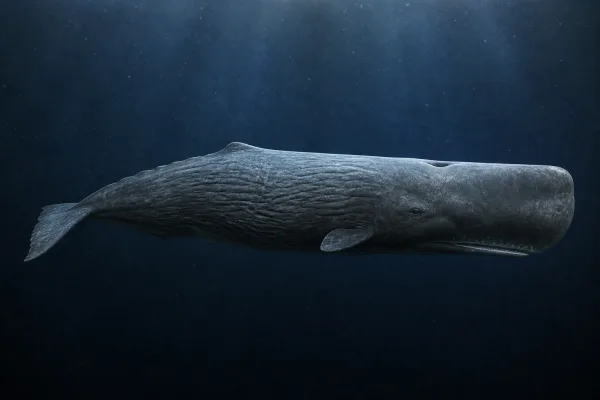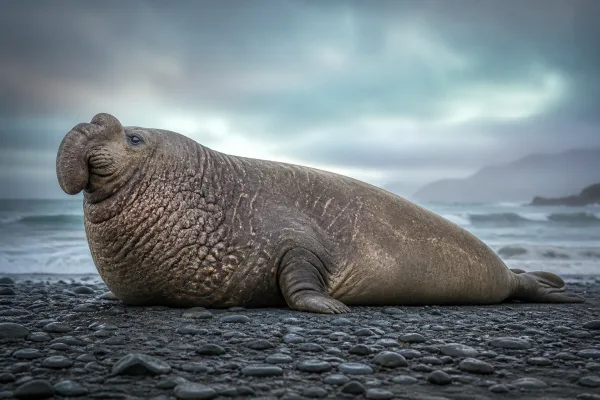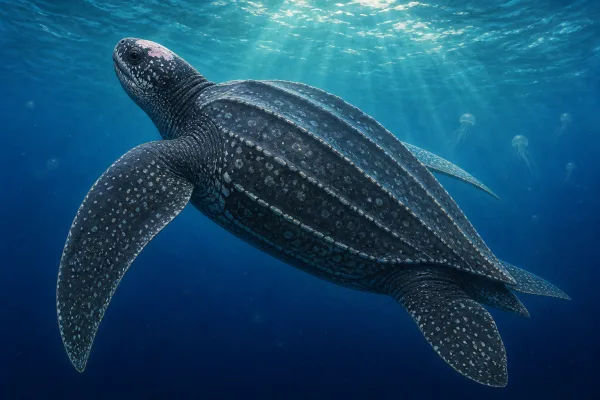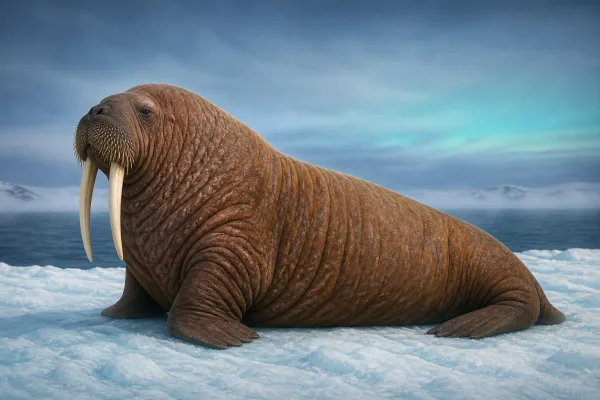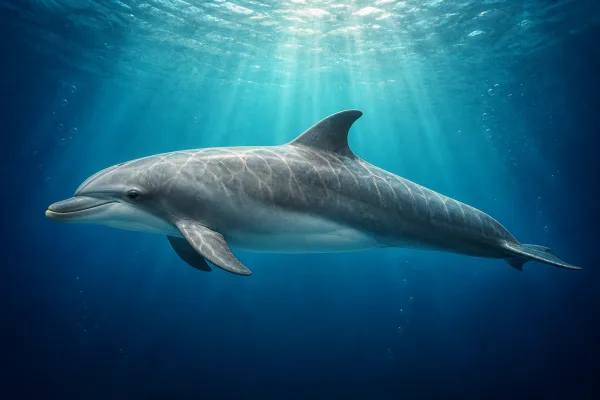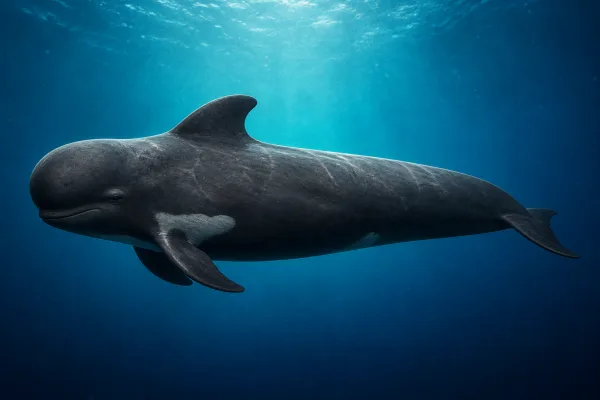
A southern elephant seal can stay underwater for well over an hour and descend more than a mile. A sperm whale can hunt at similar depths for forty-five minutes at a stretch. A leatherback turtle has been tracked to depths greater than three thousand feet. None of these animals has gills, and every one of them is carrying a limited store of oxygen into water that crushes air spaces and chills the body.
The solution is not a single trick. It is a set of linked adaptations in blood, muscle, lungs, heart and behavior that together make a breath last longer and make high pressure harmless. This guide explains each part, why the common idea that diving mammals have unusually large lungs is wrong, and how the same limits shape where and when predators can hunt.
The Problem: Pressure and a Fixed Oxygen Budget
Pressure increases by one atmosphere for every thirty-three feet of seawater. At a thousand feet an animal is under roughly thirty-one atmospheres, and at six thousand feet more than one hundred and eighty. Air spaces compress to a small fraction of their surface volume, and gases that dissolve at surface pressure behave differently at depth.
The second problem is arithmetic. A diver cannot refill while submerged, so the length of a dive is set by how much oxygen it carries down and how fast it uses it. Every adaptation described below either increases the store, reduces the rate of use, or makes the animal tolerant of the conditions that result.
Where the Oxygen Is Stored
A human diver keeps about half of the body's oxygen in the lungs. Deep-diving mammals keep most of theirs in the blood and muscle. Elephant seals, sperm whales and other champion divers have blood volumes proportionally much larger than those of land mammals, with a high concentration of red cells carrying hemoglobin. Their muscles are rich in myoglobin, a protein that binds oxygen and stores it where it will be used. Myoglobin is the reason the flesh of diving mammals is a deep, almost black red, and the concentrations in sperm whale muscle are among the highest of any animal.
High myoglobin also helps explain a physical limit. Proteins carry like charges that repel each other, and the amount of myoglobin an animal can pack into a muscle is limited by how closely the molecules can crowd together before they clump. Researchers have used the surface charge of myoglobin to estimate the diving capacity of extinct and living whales, and the numbers line up reasonably well with what tags record.
Slowing the Heart and Rationing Blood
On a dive the heart rate of a seal can fall from around a hundred beats per minute to as few as ten, a response called bradycardia. At the same time blood vessels to the skin, gut, and limbs narrow, which routes blood to the brain, heart, and the structures that cannot be without oxygen. The spleen of many seals is large and contracts during a dive, releasing a reserve of oxygen-rich red cells into the circulation.
Muscles that are cut off from the blood supply carry on with the oxygen already stored in myoglobin and, when that is gone, switch to anaerobic metabolism, producing lactic acid. Animals that dive well within their limit rarely need to do this. Routine dives stay within the aerobic limit, which is the longest dive possible without a rise in lactic acid, and exceeding it means a longer recovery at the surface before the next dive.
Surviving Pressure
The chest of a diving whale or seal is built to collapse. The ribs are flexible, joined by cartilage, and the lungs fold down as pressure rises, squeezing the remaining air out of the narrow airways, where it cannot cause trouble, into rigid tubes in the upper respiratory tract that do not absorb gas into the blood. Because little air is left in the alveoli, where gas exchange happens, nitrogen is not driven into the tissue in large amounts.
This is why diving mammals are not thought to suffer the bends in the way human divers do on a normal dive. The picture is more complicated than once believed. Stranded beaked whales exposed to loud naval sonar have shown gas bubble lesions in tissue, which suggests that a panic response or abnormal diving behavior can cause nitrogen to enter the blood and form bubbles. The leading explanation is that the adaptations work under normal conditions, and that a disturbance outside normal conditions can overload them.
Other air spaces are managed as well. The middle ear of many diving mammals is lined with tissue that can engorge with blood as pressure rises, which fills the space that would otherwise be squeezed, and the flexible skeleton of the chest lets the whole thorax deform without injury.
Diving Records and What They Tell Us
Cuvier's beaked whale holds the recorded mammal dive depth of nearly ten thousand feet and the duration record of more than three hours. Among the animals profiled here the picture is also impressive. Southern elephant seals commonly dive to around two thousand feet and have been recorded below five thousand. Sperm whales regularly work at one to two thousand feet, and tagged individuals have exceeded three thousand. Leatherback turtles routinely dive to a few hundred feet and have reached more than four thousand.
The records come from tags, and tags have only been used on a small share of the animals that exist. The absolute maximum for a species is therefore likely higher than any figure published. Profiles throughout the site give a normal range and a recorded extreme, and treat the extreme as a lower bound on what the species can do.
Typical working dives for animals on this site
- Southern elephant seal: dives of twenty to sixty minutes, repeated almost continuously for weeks at sea.
- Sperm whale: forty-five minutes or more at depths of a thousand feet and below, followed by a short rest at the surface.
- Leatherback sea turtle: roughly ten to thirty minutes at working depths, longer on the deepest dives.
Cold: The Other Pressure
Depth brings cold, and heat is lost much faster in water than air. Mammals deal with it through blubber, which insulates and stores energy, and through countercurrent arrangements in the flippers and tail that return heat from warm blood leaving the body to cool blood returning to it. Many divers also let their skin and extremities cool during a dive, which both saves heat and lowers the oxygen demand of those tissues.
The leatherback turtle is a reptile that behaves like a warm-blooded animal in cold water. Its large size, thick layer of oily fat and countercurrent flippers allow it to hold a body temperature well above that of the sea, so it can forage in cold high-latitude waters and swim to depth where other turtles cannot go.
Cephalopods Do It Differently
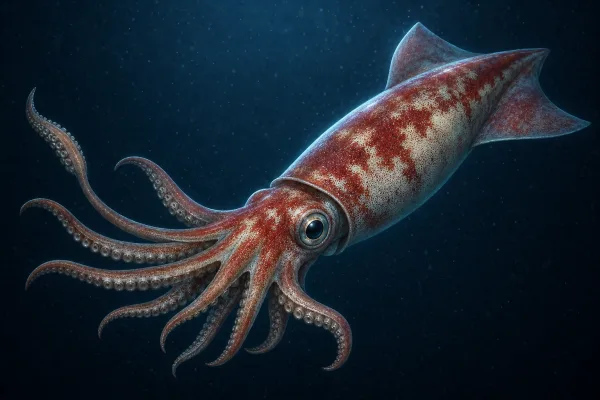
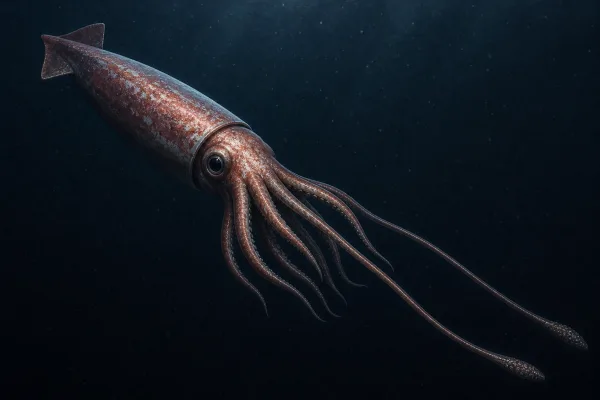
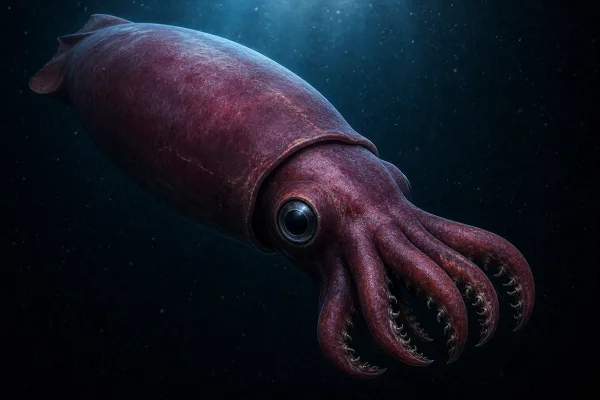
Squid and octopus have blue blood based on copper, hemocyanin, rather than iron-based hemoglobin. Hemocyanin carries oxygen well in cold, low-oxygen water but is less efficient overall, which limits the pace at which a cephalopod can sustain work. Deep-sea squid compensate by living slowly, with low metabolic rates in the cold, and some, like the Humboldt squid, tolerate low-oxygen zones by dropping activity during the day and surfacing at night to feed.
This is the same logic as in the vertebrates, with a different set of parts. In every case the animal that stays down longest is the one that spends its oxygen most slowly.
How Diving Limits Shape Behavior
A fixed oxygen budget sets a rhythm: a dive, a recovery and another dive. Because the surface interval is not feeding time, an animal gets the best return from deep dives when prey is dense and close, which is why foraging effort follows the daily vertical migration of the deep scattering layer, where fish and squid rise toward the surface after dark.
It also explains why disturbance is costly. An elephant seal or sperm whale that is forced to flee, change course or extend a dive pays for it in oxygen, and a series of interruptions can reduce the time left for feeding. This is part of the reason noise, shipping and fishing gear appear among the threat factors on species profiles.
What Remains Unknown
Deep divers are among the least observed animals on Earth because they spend most of their lives at depth, far from shore. Tags have transformed the field, but they record where an animal was, not what it did, and a single sperm whale may be tracked for only a few weeks. Questions that remain open include how beaked whales manage repeated extreme dives, how much anaerobic metabolism animals use in nature, and how climate-driven shifts in prey depth will change the cost of a dive.
Sources
-
Smithsonian Ocean
Smithsonian National Museum of Natural History
Peer-reviewed public science writing on marine life, ecosystems and ocean change.
-
Species Directory
NOAA Fisheries
Management-grade biology, distribution and stock information for species in United States waters.
-
Monterey Bay Aquarium Research Institute
MBARI
Deep-sea observations, including remotely operated vehicle records of squid and midwater predators.
-
International Whaling Commission
IWC
Cetacean population status, ship-strike and entanglement reporting.
-
SeaLifeBase
SeaLifeBase Project
Companion database to FishBase covering non-fish marine organisms, including cephalopods.
Figures on this page were last checked against these sources on .