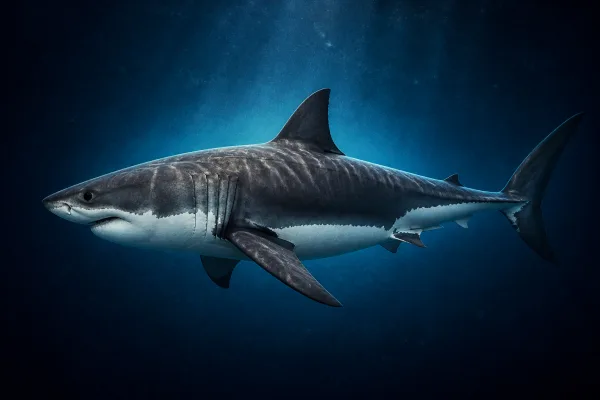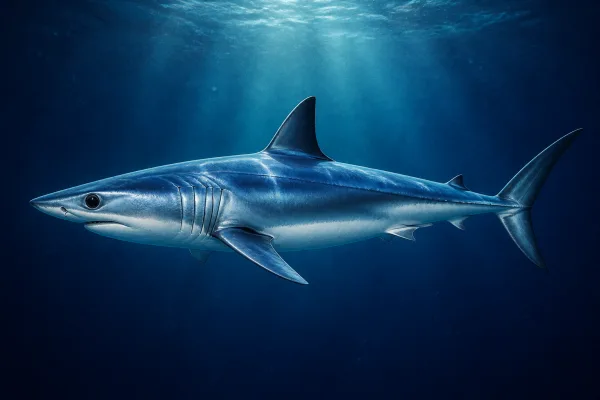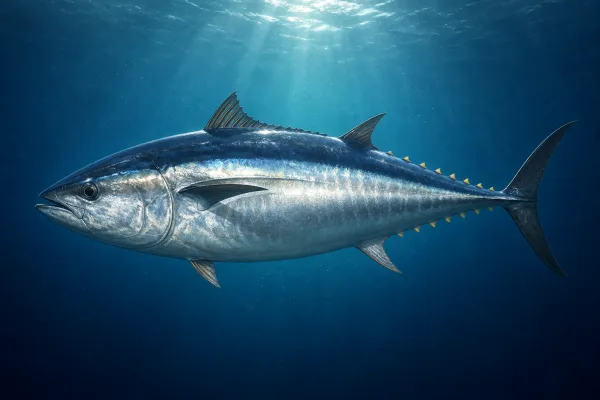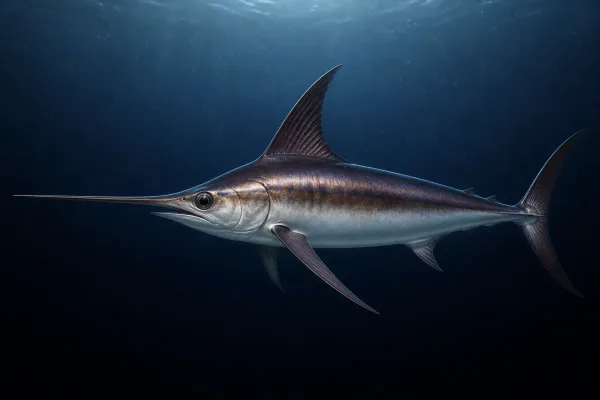
Most fish match the temperature of the water around them. A few of the ocean's most successful predators do not. Bluefin tuna, white sharks, makos, swordfish and a handful of relatives hold parts of the body well above sea temperature, and they swim faster, hunt in colder water and cover more distance than their cold-bodied relatives. The pattern is no coincidence. Warmth and speed are linked by the physics of muscle.
This guide explains how a fish can stay warm in cold water, what a streamlined body does to the cost of swimming, why published top speeds need careful reading, and what other predators, from leatherback turtles to polar bears, do when the problem is cold rather than speed.
Why Temperature Controls Speed
Muscle contracts faster and with more force when it is warm. A drop of ten degrees Celsius roughly halves the rate of many chemical reactions, including those that power a swimming muscle. A fish that is cooled by cold water along with its surroundings can therefore only sustain a fraction of the power that the same muscle would deliver if it were warm.
Most fishes breathe through gills, and gills are an efficient radiator. Blood passing through them is exposed to water over a very thin membrane, and almost all of the heat made in the muscle is lost to the sea before it can circulate back to the body. Warm-bodied fish had to solve a physical problem: how to breathe water without cooling the blood that carries oxygen to the muscle.
The Countercurrent Heat Exchanger
The solution is a structure called the rete mirabile, Latin for wonderful net. In tuna and in the lamnid sharks, which include the great white and the shortfin mako, the main blood vessels that carry cold blood in from the gills to the muscle run through a dense tangle of tiny vessels alongside the vessels carrying warm blood out of the muscle. Heat leaves the warm outgoing blood and passes to the cold incoming blood before it leaves the body. The muscle's heat stays where it was made.
In the tuna the warm tissue is the red swimming muscle deep in the body close to the backbone, which can run many degrees above the water. In lamnid sharks it is the same position. In the great white shark the stomach and parts of the brain are also warmed, which lets the animal digest food rapidly and hunt in cold water. White sharks and makos can hold body temperatures ten degrees Celsius or more above the sea.
Heating the Eyes and Brain
Swordfish and several other billfishes have gone a step further. A small muscle that originally moved the eye has been converted into a heater organ that produces heat and little movement. The heat is directed into the brain and the eyes, raising their temperature well above that of the surrounding water.
The advantage is vision. The temperature of the retina limits how quickly the eye can update a picture, and a swordfish hunting at several hundred meters in cold water can see rapid movements far better with a warm eye than with a cold one. The behavior is consistent with a predator that spends the day below the thermocline in cold, dim water and rises toward the surface at night in pursuit of squid and fish.
Streamlining and the Shape of Fast
The body shapes of fast swimmers are similar for good reasons. A spindle, rounded at the front and tapering to a narrow tail stalk, minimizes the drag created by water flowing past. A rigid, crescent-shaped tail with a narrow base and a high aspect ratio generates thrust efficiently, because it is long and thin and moves little water sideways. Many fast fish have a keel along the tail stalk, a ridge that stabilizes the tail and reduces drag, and some fold their fins into grooves along the body when moving fast.
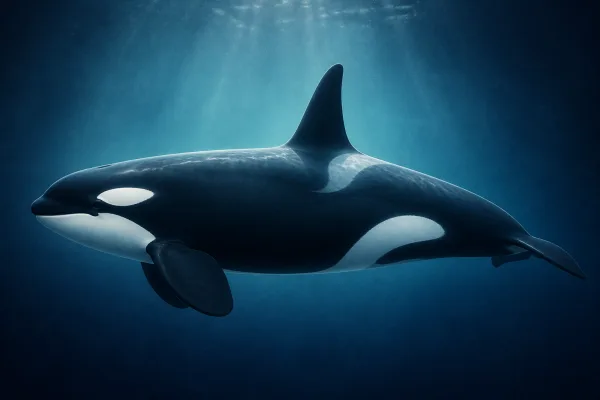
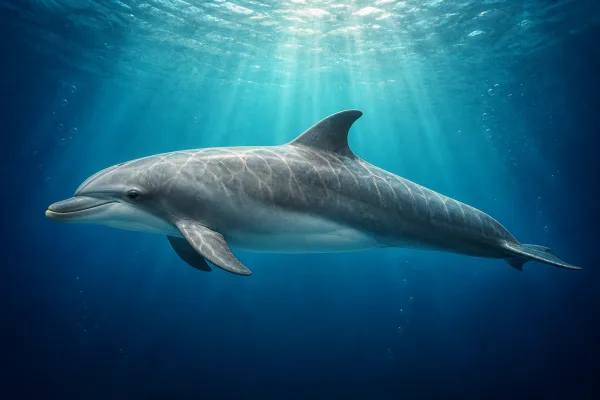
Marine mammals reached the same shape by a different route. Dolphins, orcas and seals are built on spindle profiles, with stiff flippers and a horizontal tail, the fluke, that moves up and down instead of side to side because the spine of a mammal flexes in that direction. The result is a tail with similar proportions, produced by a different skeleton.
What the Top Speeds Really Mean
Published speeds should be read carefully. Most were measured as a burst: a short sprint during a feeding attack or while leaping, sometimes estimated from video and sometimes from a tag. They are not cruising speeds, and a number that appears in a popular article may rest on a single observation.
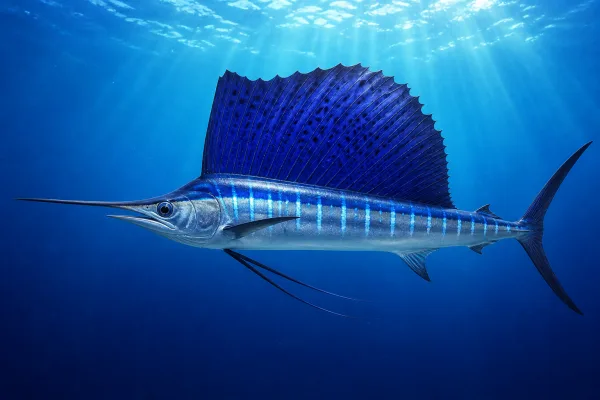
The classic example is the sailfish, popularly credited with about sixty-eight miles an hour. That figure traces to a single line-stripping test in the 1940s and is not supported by modern measurement, which puts the species closer to twenty-two miles an hour. Better supported values for the fastest predators profiled here are in the range of twenty to forty miles an hour for brief bursts, with shortfin makos and some orcas and dolphins at the upper end. These numbers are still very high for animals that move through a fluid hundreds of times denser than air.
Cruising speed is a more useful number. Large sharks and tuna typically travel at one to three miles an hour on migration, which is about a slow walking pace, and a bluefin tuna can cross an ocean basin at that rate. Efficient steady swimming, not sprinting, is the capability that sets the range.
How to read a speed figure
- Check whether it is a burst, a sustained speed or an average over a trip.
- Check how it was measured: tag, video, line pull or estimate from body length.
- Check whether it is a single record or a repeated measurement.
- Treat any figure given without a source as an estimate.
Other Ways to Beat the Cold
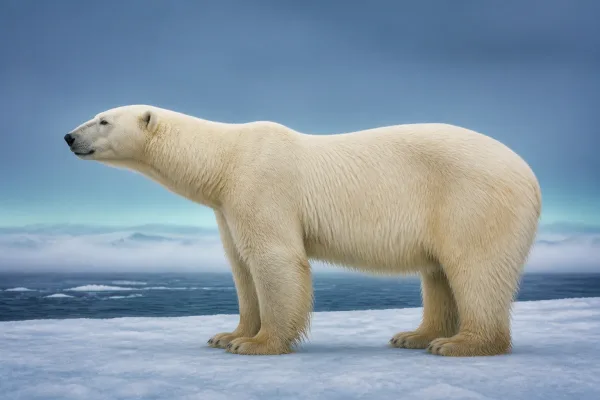
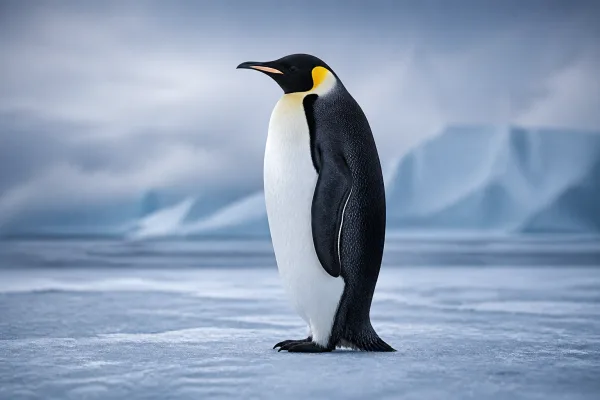
Speed is one reason to be warm, but there are others. Marine mammals and birds use insulation. Seals, whales and walruses carry a layer of blubber that cuts heat loss and doubles as stored energy, while emperor penguins add dense, overlapping feathers and a trapped layer of air. A polar bear relies on fur over thick fat and is poorly adapted to long swims in warm water, which is one reason it hunts from the ice.
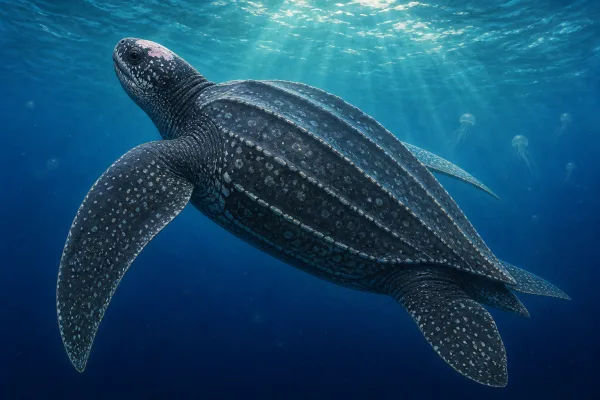
The leatherback sea turtle takes a different path called gigantothermy. A very large body has a low surface area relative to its volume, so it loses heat slowly. With thick insulating fat, a high rate of muscle heat production and a countercurrent arrangement in its flippers, a leatherback holds its body temperature well above that of cold water and forages at latitudes beyond the range of other sea turtles.
The Cost of Being Warm
Warmth is not free. A warm-bodied shark has a higher resting metabolism than a cold-bodied one and must eat more. White sharks have to hunt regularly to supply the energy that a heated stomach and a fast swimming muscle burn, and tuna must swim constantly to move water across the gills, because they cannot pump it as some sharks can.
That makes warm-bodied predators vulnerable. They depend on dense, energy-rich prey, such as seals and schooling fish, and on large ranges. When prey populations decline or fishing removes the largest animals, they have less margin than a cold-bodied animal that can slow its metabolism and wait. Several of these species are among those most affected by fishing.
Putting the Numbers in Context
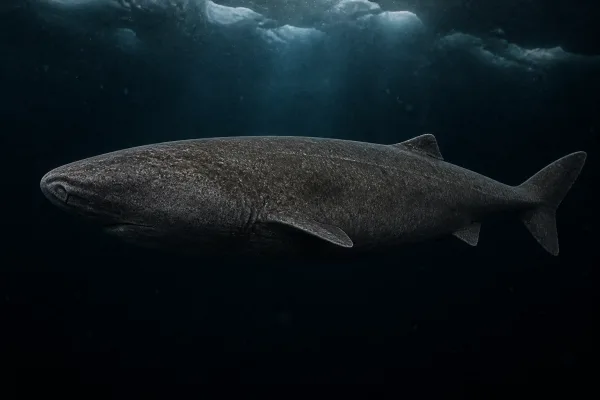
On this site a speed is reported as a maximum, with a note on how it was observed. When comparing two animals, the better question is usually not which is faster but what each speed is for. A swordfish sprints to catch a squid, a bluefin tuna sustains pace to cross an ocean, and a Greenland shark moves slowly because it can afford to. Body design follows from what the animal eats and how it gets it.
Sources
-
FishBase
FishBase Consortium
Compiled length, weight, growth and depth records for fish species, drawn from the primary literature.
-
Florida Program for Shark Research
Florida Museum of Natural History
Shark biology, size records and documented interaction data.
-
Species Directory
NOAA Fisheries
Management-grade biology, distribution and stock information for species in United States waters.
-
Smithsonian Ocean
Smithsonian National Museum of Natural History
Peer-reviewed public science writing on marine life, ecosystems and ocean change.
-
Monterey Bay Aquarium
Monterey Bay Aquarium
Husbandry-informed accounts of feeding, growth and behavior for species held in public aquariums.
Figures on this page were last checked against these sources on .