Every species profile on this site carries a conservation status, a short code such as LC, VU or EN. It looks like a simple grade, and readers often treat it as one: a status of Least Concern means the animal is fine, Endangered means it is nearly gone. The reality is more careful and more useful. A status is a statement about the probability of extinction under a defined set of rules, and it says less than people assume about how many animals there are or how they are doing locally.
This guide explains where the categories come from, how an assessment is built, how to read the trend and year that sit beside each status, and why different authorities can give the same animal different labels without contradicting one another.
Who Assigns the Labels
The most widely used list is the IUCN Red List of Threatened Species, maintained by the International Union for Conservation of Nature. Assessments are written by specialist groups of scientists, reviewed, and published with a supporting document that lists the data used. The status shown on each profile on this site is the global IUCN category unless stated otherwise.
National and regional systems exist alongside it. The United States Endangered Species Act, administered by NOAA Fisheries for most marine species and by the Fish and Wildlife Service for others, applies its own legal categories to populations in or connected to American waters. CITES, the trade convention, lists species by how much international trade threatens them. These systems ask different questions, which is why they do not always agree.
The Categories, From Safe to Gone
The Red List sorts species into a ladder. At the bottom of concern are Least Concern and Near Threatened. The three threatened categories are Vulnerable, Endangered and Critically Endangered, each defined by how likely extinction is in the wild within a stated period. Beyond that are Extinct in the Wild and Extinct. Two further categories sit outside the ladder: Data Deficient, for species with too little information to assess, and Not Evaluated.
The threatened categories are set by numeric thresholds. A species can qualify through a fast population decline, a very small population or range, a small number of mature individuals combined with continuing decline, or a quantitative model of extinction risk. The assessor needs to satisfy only one of five criteria to place a species in a category, which means that two Endangered species can be in trouble for entirely different reasons.
Codes used on this site
- LC: Least Concern. Widespread and abundant enough not to qualify for a higher category.
- NT: Near Threatened. Close to qualifying, or likely to qualify without continued conservation action.
- VU: Vulnerable. High risk of extinction in the wild.
- EN: Endangered. Very high risk of extinction in the wild.
- CR: Critically Endangered. Extremely high risk of extinction in the wild.
- DD: Data Deficient. Not enough information to assess the risk.
Status Is Not a Head Count
A Least Concern label can apply to an animal with millions of individuals, and an Endangered label can apply to one that is still common in some places. The category measures risk of extinction over a period of years or generations, not the absolute number of animals. A species with a very large range and a decline of twenty percent over three generations may remain Least Concern. A species with a few thousand animals and a stable trend may still qualify as Vulnerable because a small population is exposed to a single bad event.
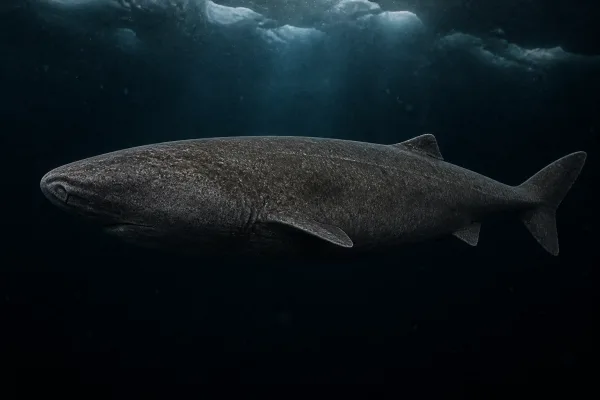
Generation length matters here. Rules for population decline are measured over the longer of ten years or three generations, so long-lived animals with slow reproduction, such as the Greenland shark, are judged against a time window far longer than a short-lived squid. For these animals a decline can already be well advanced before it appears as a trend.
Reading the Trend and the Year
Beside the status each profile gives the year of the assessment and the population trend: increasing, stable, decreasing or unknown. Both are important. A species assessed in 2012 may have been through a decade of change, so the year is a reminder to check whether a more recent assessment exists. The trend is a separate judgment from the category. Some species classed as threatened now show an increasing population because protection began, and some Least Concern species show a decreasing trend that has not yet reached a threshold.
An unknown trend does not mean the animal is secure. For many deep-sea and offshore predators, the honest answer is that nobody has counted them. Treat an unknown trend as an unanswered question, not a reassurance.
Why Data Deficient Is Not Good News
Data Deficient is the most misread category. It does not mean a species is safe, nor that it is threatened. It means the information available, on distribution, abundance or threats, does not support any other category. The Red List guidance specifically says that a Data Deficient listing is not a category of threat, and that species in it may deserve more attention for exactly that reason.
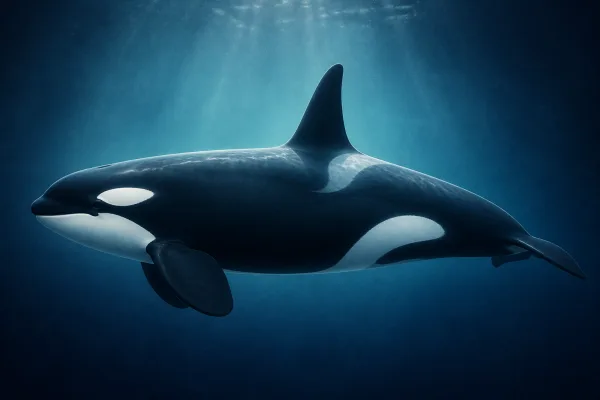
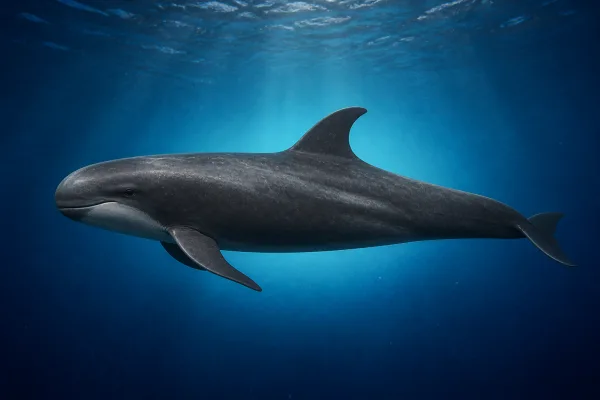
Cetaceans offer a clear case. The orca is listed globally as Data Deficient, not because it is poorly known as an animal but because the recognized forms in different oceans differ so much in diet, genetics and behavior that they may prove to be separate species. A single global category would be meaningless, so assessors wait for the taxonomy to settle, while individual populations, such as the Southern Residents of the northeastern Pacific, are assessed and protected separately.
Why Authorities Disagree
It is common to find a species labeled differently by different bodies. The IUCN assesses the whole species worldwide. A national agency assesses populations within its jurisdiction, and may list a local population as endangered while the global species is Least Concern. The reverse also happens: a species can be threatened globally and well managed in one nation's waters.
Date matters too. Assessments are revised at intervals that range from a few years to more than a decade, and a news report that cites an older label is not necessarily wrong, only out of date. Where this site cites a legal status, it names the law and the population it applies to.
Threats Are the Other Half of the Story
A category tells you how worried assessors are. The threats listed beside it tell you why. On a typical profile the factors fall into a short list of causes: fishing, either targeted or as bycatch, habitat loss, pollution including plastics and chemical contaminants, noise, vessel strikes, entanglement, climate change and hunting or trade.
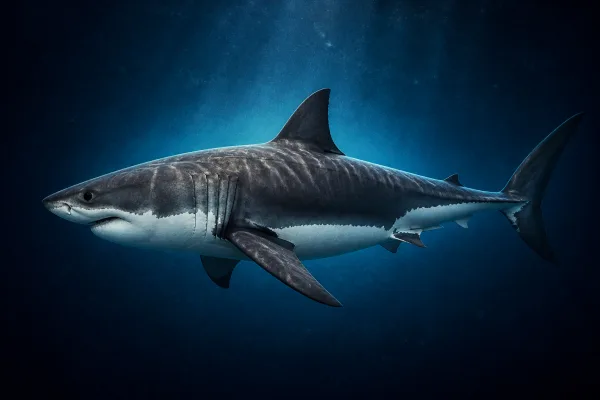
Reading status and threat together is the most useful habit. Two sharks classed as Vulnerable may be declining for different reasons, one from fishing for fins and the other from the loss of coastal nursery habitat, and the right response to each is different. Likewise, an animal may be classed as Least Concern despite a serious local threat that has not yet reached the thresholds for global concern.
What Counts as Recovery
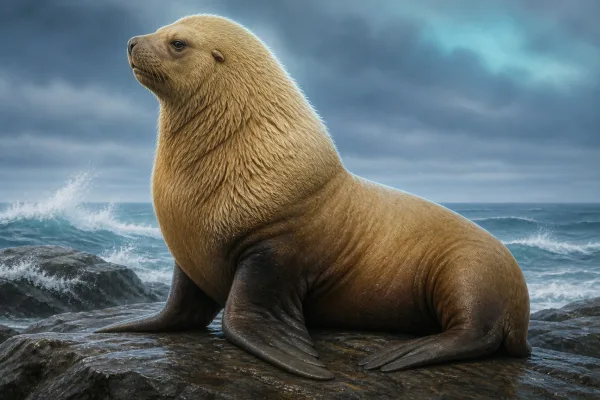
Status can improve, and for marine predators it has. Several whale populations that were hunted to a fraction of their numbers have rebounded after protection, and some seal and sea lion populations have recovered strongly under legal protection. Recovery is slow in long-lived, slow-breeding animals, because it takes decades for a protected population to grow, and it can be undone by a single new threat.
When a species moves to a lower category, assessors record the change as genuine only if it reflects an actual improvement in the population or threats. A change that arises from new information or a change in the rules is recorded separately, so that the Red List can distinguish real recovery from better data.
A Short Checklist for Reading a Status
When you see a conservation status on a profile, here are the questions worth asking. They turn a label into information.
Questions to ask of any label
- Is this the global category, or a regional or legal listing?
- In what year was the assessment made, and has it been updated since?
- Is the trend increasing, stable, decreasing or unknown?
- Which threats are listed, and are they getting worse?
- Is the animal listed as Data Deficient, and if so, why?
Sources
-
The IUCN Red List of Threatened Species
International Union for Conservation of Nature
Global conservation assessments, population trends and threat classifications for every species profiled here.
-
Species Directory
NOAA Fisheries
Management-grade biology, distribution and stock information for species in United States waters.
-
Convention on International Trade in Endangered Species of Wild Fauna and Flora
CITES Secretariat
Appendix listings governing international trade in the species profiled here.
-
U.S. Fish & Wildlife Service
USFWS
Listing decisions and recovery planning for protected marine and coastal species.
-
International Whaling Commission
IWC
Cetacean population status, ship-strike and entanglement reporting.
Figures on this page were last checked against these sources on .